Short Answer
Overview
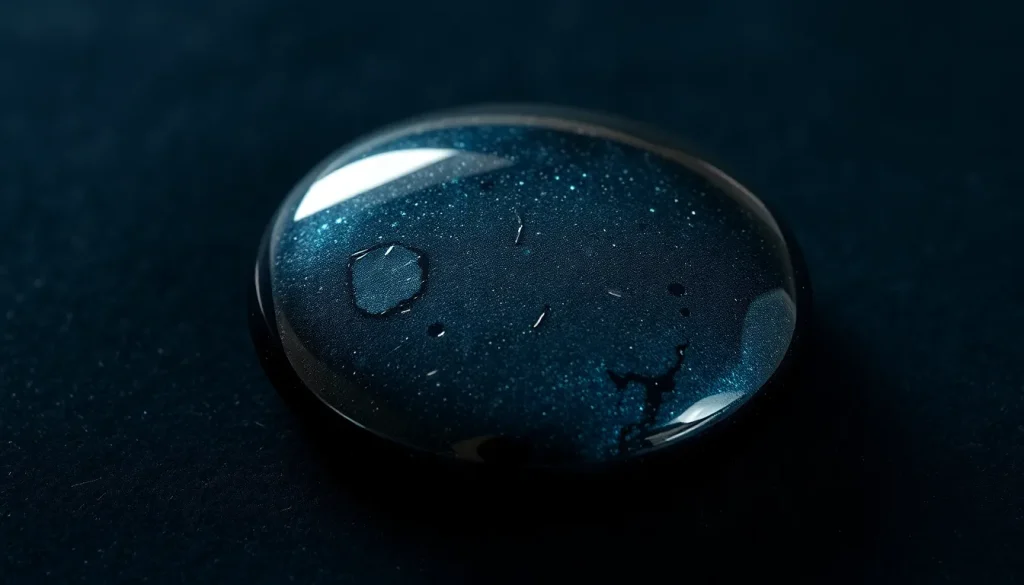
Geminite is a rare lead‑antimony sulfide mineral with the chemical formula Pb3Sb2S6. It belongs to the sulfosalt group and crystallises in the monoclinic system. The stone is characterised by a metallic luster and a colour range that runs from steel‑gray to deep black, often showing an iridescent sheen when polished. Because of its high specific gravity and relatively low hardness, geminite is more commonly collected by mineral enthusiasts than cut for mainstream jewellery.
History and Origin
The mineral was first described in the late 19th century from specimens found in the Kola Peninsula of Russia. Since then, additional occurrences have been reported from lead‑rich districts of Kazakhstan, the Canadian Shield, and a few isolated localities in Europe. Historically, geminite has been of interest to mineralogists rather than jewelers, due to its lead content and metallic appearance.
Meaning and Symbolism
In traditional gemstone lore, geminite is associated with grounding and protection. Its dense, metallic nature is said to symbolise strength and resilience, encouraging wearers to stay steadfast in challenging situations. Because the stone is uncommon, it is sometimes viewed as a symbol of uniqueness and individuality.
Healing and Metaphysical Properties
Crystal‑healing practitioners attribute the following properties to geminite, based on belief rather than scientific evidence:
- Grounding: Helps anchor scattered energy and promotes a sense of stability.
- Protection: Thought to create a shield against negative influences.
- Emotional balance: Believed to calm intense emotions and support inner calm.
These claims are part of traditional metaphysical systems and should not be taken as medical advice.
Varieties and Types
Geminite occurs mainly in two forms:
- Crystalline aggregates: Well‑formed monoclinic prisms that display a shining metallic surface when freshly broken.
- Massive nodules: Irregular, often opaque masses that are prized by collectors for their weight and colour.
Both varieties can be polished to a high shine, revealing subtle iridescence that ranges from blue‑green to violet under certain lighting.
Jewelry Uses and Care
Because of its softness (Mohs 2.5–3) and high density, geminite is used sparingly in jewellery, typically as cabochons, beads, or in inlay work where the stone is protected by surrounding metal settings. When incorporated, designers often pair it with harder gemstones to mitigate wear.
Care instructions:
- Clean with a soft, lint‑free cloth; avoid abrasive pads.
- Do not expose to harsh chemicals, ultrasonic cleaners, or steam, as these can damage the surface.
- Store separately from harder gemstones to prevent scratching.
- Because of its lead content, handle large pieces with care and wash hands after handling.
Buying Guide
When considering a geminite purchase, keep the following points in mind:
- Authenticity: Verify that the stone exhibits a metallic luster, high specific gravity, and the characteristic black‑gray colour. A simple “float test” (the stone should sink rapidly in water) can indicate high density.
- Source documentation: Reputable dealers will provide provenance information, especially noting the locality (e.g., Kola Peninsula, Kazakhstan).
- Treatment disclosure: Some specimens are polished or coated to enhance shine; ask the seller for any treatments applied.
- Safety: Because geminite contains lead, ensure that any jewellery conforms to local safety regulations, especially for pieces that may have prolonged skin contact.
- Professional appraisal: For valuable or large specimens, obtain a gemological report from a certified laboratory.
FAQ
What is geminite good for?
Geminite is prized by collectors for its metallic luster and high density; traditionally it is believed to offer grounding and protective energy, though these claims are not medically verified.
Is geminite rare?
Geminite is relatively rare in gem‑quality form. High‑quality, well‑crystallised specimens are uncommon, while massive nodules are more frequently found in lead‑rich mining districts.
How can you tell if geminite is real?
Real geminite feels heavy for its size, displays a metallic black‑gray colour, and has a black streak. A professional gemological test (e.g., X‑ray fluorescence) can confirm its lead‑antimony composition.
What chakra is geminite associated with?
In crystal‑healing traditions geminite is sometimes linked to the Root chakra for grounding, though there is no universally accepted chakra association.
How should you clean geminite?
Wipe gently with a soft, lint‑free cloth. Avoid ultrasonic cleaners, harsh chemicals, and prolonged exposure to water. Store separately to prevent scratching, and handle with gloves if the piece is large due to its lead content.
Leave a Reply