
Short Answer
Overview
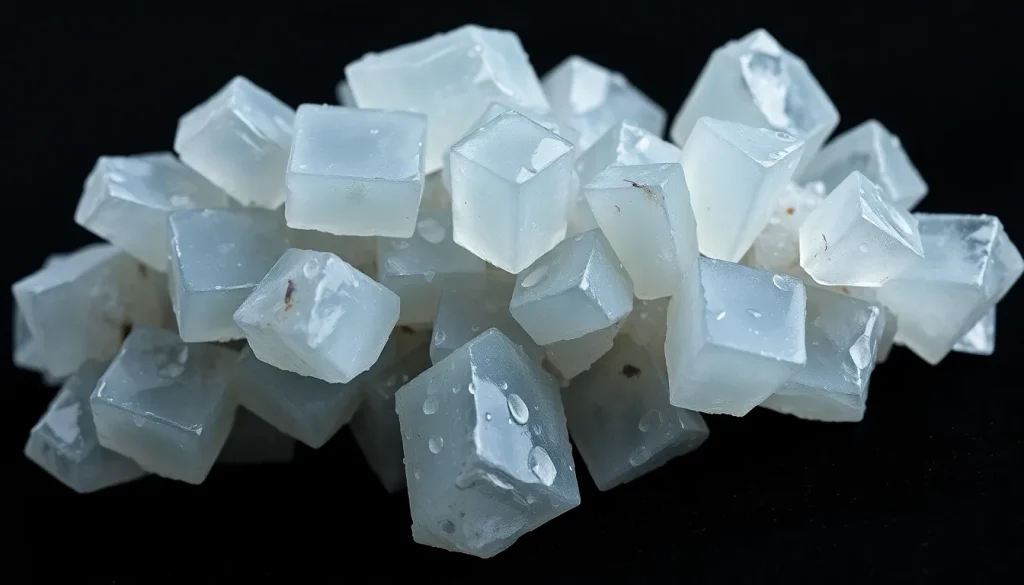
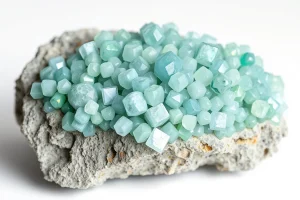
Gaylussite is a hydrated sodium‑calcium carbonate mineral with the chemical formula Na₂Ca(CO₃)₂·5H₂O. It crystallizes in the monoclinic system, typically as tabular or prismatic crystals that are colourless, white, or very pale blue. The mineral is soft (Mohs 2.5–3) and water‑soluble, which limits its practical use in jewelry but makes it of interest to mineral collectors and scientific study.
History and Origin
The mineral was first described in 1826 from samples collected at the famous soda lakes of California. It was named in honour of the French chemist Joseph Louis Gay‑Lussac, who contributed significantly to early studies of gases and carbonates. Gaylussite forms in evaporitic environments where sodium‑rich brines interact with calcium carbonate, creating the characteristic hydrated carbonate.
Meaning and Symbolism
In traditional gemstone lore, Gaylussite is associated with clarity of thought and the flow of ideas, reflecting its transparent appearance. It is sometimes regarded as a stone of transformation, symbolising the transition from solid to fluid states, echoing its solubility in water.
Healing and Metaphysical Properties
Crystal‑healing practitioners attribute Gaylussite with the ability to promote emotional balance and enhance communication. It is believed to aid in releasing old patterns, encouraging adaptability, and supporting the throat chakra for clearer self‑expression. These claims are based on metaphysical traditions and are not supported by medical science.
Varieties and Types
While Gaylussite itself does not have widely recognized varieties, specimens can exhibit slight colour differences due to trace impurities. Some crystals appear pale blue, others remain pure white. Occasionally, Gaylussite forms pseudomorphs after halite or other evaporite minerals, preserving the original crystal shape while the composition changes.
Jewelry Uses and Care
Because of its low hardness and water‑solubility, Gaylussite is unsuitable for most everyday jewelry. When used, it is typically set in protective, sealed settings such as resin or glass cabochons, and is reserved for novelty pieces or laboratory displays. Care instructions include:
- Avoid exposure to moisture; even humid air can cause deterioration.
- Handle with soft gloves or tweezers to prevent scratching.
- Store in a sealed, low‑humidity container, preferably with silica gel.
- Do not clean with ultrasonic cleaners or chemical solvents.
Buying Guide
When purchasing Gaylussite, consider the following factors:
- Source and locality: Specimens from well‑documented evaporite sites such as Mono Lake (USA) or Lake Magadi (Kenya) are preferred.
- Crystal quality: Look for well‑formed, unblemished crystals with clear edges.
- Stability: Verify that the seller provides a protective mounting or clear storage recommendations.
- Documentation: Reputable dealers will include a mineral identification certificate or reference to a recognized database (e.g., Mindat).
Because Gaylussite is fragile, it is advisable to purchase from specialized mineral dealers rather than general gemstone retailers.
FAQ
What is Gaylussite good for?
Gaylussite is prized by collectors for its rare evaporite crystals and is occasionally used in novelty jewelry. Traditional crystal‑healing beliefs suggest it supports emotional clarity and adaptability, though these are not medically proven.
Is Gaylussite rare?
High‑quality Gaylussite crystals are relatively rare because the mineral forms only in specific soda‑rich evaporite environments and is water‑soluble, making preservation challenging.
How can you tell if Gaylussite is real?
Authentic Gaylussite is typically colourless to pale blue, exhibits perfect cleavage on {010}, and feels very soft (Mohs 2.5–3). A professional gemological lab can confirm its composition with X‑ray diffraction or chemical analysis.
What chakra is Gaylussite associated with?
In crystal‑healing circles, Gaylussite is linked to the throat chakra, believed to aid clear communication, though this association is based on tradition rather than scientific evidence.
How should you clean Gaylussite?
Because Gaylussite dissolves in water, clean it with a dry, soft brush or a lint‑free cloth. Avoid any liquids, ultrasonic cleaners, or harsh chemicals, and store it in a low‑humidity environment.
Leave a Reply