
Short Answer
Overview
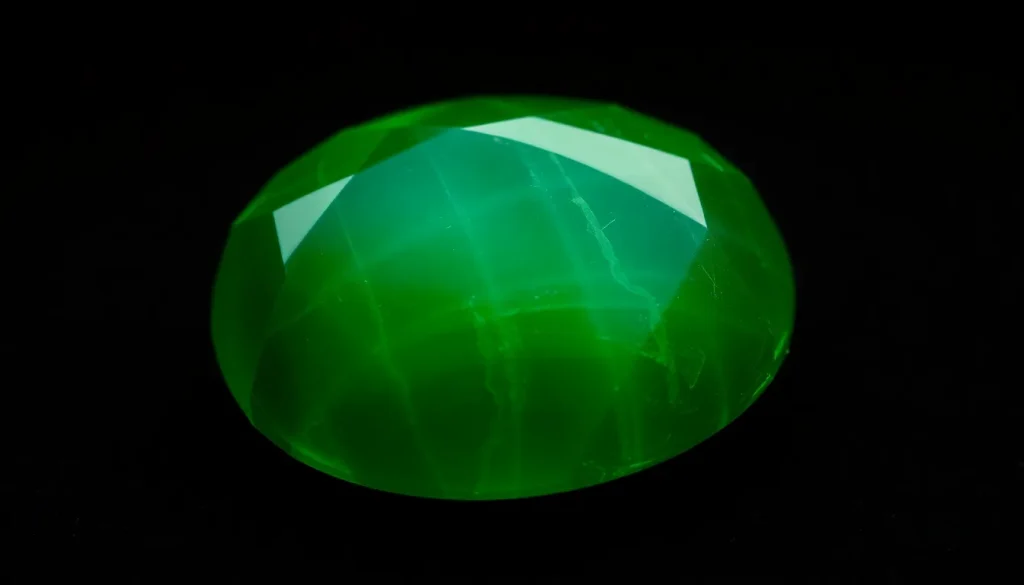
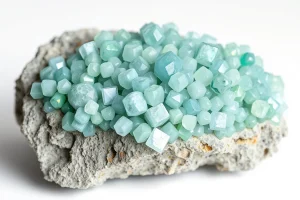
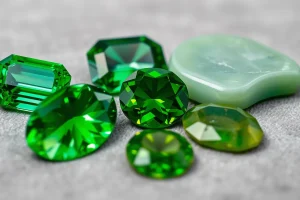
Microcline is a potassium-rich member of the feldspar group, chemically expressed as KAlSi3O8. It crystallises in the triclinic system and is most widely recognized for its green shades, ranging from pale mint to deep forest tones. In its gem‑cut form, microcline is valued for its high polishability, good transparency, and characteristic twinning that can produce a subtle grid‑like pattern on polished surfaces.
History and Origin
The name “microcline” derives from the Greek words mikros (small) and klinos (inclination), referencing its fine‑grained crystal lattice compared with the related mineral orthoclase. Historically, microcline was identified as a distinct mineral in the early 19th century during systematic studies of feldspar polymorphs. Large, gem‑grade deposits were first documented in the United States (Idaho, South Dakota) and later in Brazil, Russia, and Canada. While not a traditional gemstone in ancient cultures, its green hue has occasionally been associated with the verdant stones used in ceremonial objects.
Meaning and Symbolism
In contemporary crystal‑healing circles, microcline is said to embody clarity of thought and emotional balance. Its green color is linked to renewal, growth, and the heart’s capacity for compassion. The mineral’s finely intergrown twins are sometimes interpreted as a symbol of inner harmony and the integration of opposites.
Healing and Metaphysical Properties
Traditional beliefs attribute the following metaphysical qualities to microcline:
- Emotional support: Helps soothe anxiety and promotes a calm, centered mindset.
- Physical well‑being: Thought to assist the body’s detoxification processes and support the endocrine system, though these claims are not medically verified.
- Spiritual growth: Encourages insight during meditation and may aid in connecting with one’s intuition.
These properties are based on cultural traditions and should not replace professional health advice.
Varieties and Types
Microcline occurs in several recognized varieties, most of which differ in color or texture:
- Amazonite (a related potassium feldspar): Often confused with microcline, amazonite displays a blue‑green to turquoise hue and typically lacks the distinct grid twinning of microcline.
- Adularia: A fine‑grained, transparent form of microcline that can form well‑developed crystals, prized by collectors.
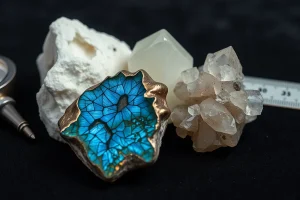
- Labradorite‑type microcline: Rare specimens showing labradorescence, a play of iridescent colors, due to internal lamellae.
Jewelry Uses and Care
Microcline is cut into cabochons, beads, and occasionally faceted gems for rings, pendants, and earrings. Its hardness of 6–6.5 on the Mohs scale makes it suitable for most jewelry, though care should be taken to avoid hard impacts that could cause cleavage along its perfect {001} plane.
Cleaning: Use warm, soapy water and a soft brush. Avoid ultrasonic cleaners if the piece contains untreated fractures or is set in porous metal. For stubborn grime, a gentle ammonia solution (a few drops in water) is acceptable.
Storage: Keep microcline pieces separate from harder gems such as quartz or topaz to prevent scratching. Store in a soft pouch or a compartment lined with felt.
Buying Guide
When selecting microcline, consider the following factors:
- Color intensity: Deep, even green is generally more desirable than mottled or pale tones.
- Clarity: Inclusions are common; aim for stones with minimal visible cracks, especially near the surface.
- Cut quality: Look for well‑polished surfaces that reveal the characteristic twinning pattern.
- Treatment disclosure: Some microcline may be heat‑treated to enhance color. Reputable dealers will disclose any treatments.
- Certification: For high‑value pieces, request a gemological report from a recognized laboratory.
Price varies widely based on color, size, and origin, ranging from modest for small cabochons to premium for large, flawless crystals.
FAQ
What is microcline good for?
Microcline is valued for its attractive green color in jewelry, as a collector’s mineral, and traditionally for its purported emotional‑balancing properties in crystal‑healing practices.
Is microcline rare?
High‑quality, deep‑green microcline is less common than its abundant gray or white counterparts, especially when free of fractures. Large, flawless crystals are considered rare, while the mineral itself is relatively plentiful in pegmatite deposits.
How can you tell if microcline is real?
Real microcline shows a vitreous luster, a hardness of 6–6.5, and often exhibits a grid‑like twinning pattern under magnification. A professional gemologist can confirm identity with refractive index measurements and X‑ray diffraction.
What chakra is microcline associated with?
In crystal‑healing traditions, microcline is sometimes linked to the Heart chakra for its green color, though there is no universally accepted chakra association.
How should you clean microcline?
Clean microcline with warm, soapy water and a soft brush. Avoid harsh chemicals, ultrasonic cleaners, and high‑impact cleaning methods, as the stone can cleave along its perfect {001} plane.
Leave a Reply