Short Answer
Overview
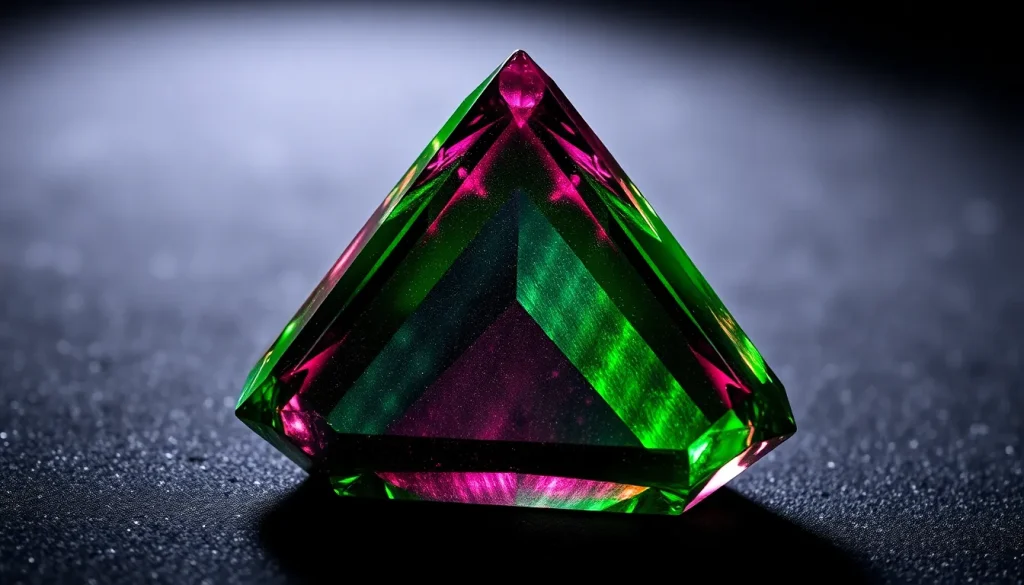
Elbaite is the lithium‑rich member of the tourmaline group, a complex cyclosilicate that displays a remarkable spectrum of colors. Chemically it can be expressed as Na(Li1.5Al0.5)Al6(BO3)3Si6O18(OH)4F, though the exact composition varies with iron, manganese, and copper content, producing the diverse hues for which elbaite is celebrated.
Elbaite crystals are typically prismatic with a triangular cross‑section, and they are most often cut as faceted gemstones for rings, pendants, and earrings. The stone’s hardness of 7–7.5 on the Mohs scale makes it suitable for everyday wear, while its high refractive index (≈1.635–1.650) imparts a brilliant sparkle.
History and Origin
The name “elbaite” originates from Elba, a small island off the coast of Tuscany, Italy, where the mineral was first identified in the early 19th century. Historically, elbaite specimens were collected by mineralogists rather than jewelers, but the discovery of vivid pink and green varieties in the 20th century sparked interest in the gemstone market.
Major elbaite deposits are found in Brazil (particularly Minas Gerais), Afghanistan, Mozambique, Madagascar, Nigeria, Pakistan, Sri Lanka, and the United States (California). Each locality imparts subtle differences in trace element chemistry, influencing color and clarity.
Meaning and Symbolism
In traditional gemstone lore, elbaite is associated with emotional balance, self‑expression, and personal empowerment. The wide color range allows individual varieties to carry specific symbolic meanings: pink elbaite (often called rubellite) is linked to love and compassion, while green elbaite (known as verdelite) is said to promote growth and renewal.
Collectors also value elbaite for its rarity and the way its colors can change under different lighting conditions, a phenomenon known as pleochroism, which is sometimes interpreted as a metaphor for inner multidimensionality.
Healing and Metaphysical Properties
Crystal‑healing practitioners attribute a range of benefits to elbaite based on its color. Pink elbaite is believed to open the heart chakra, fostering love and emotional healing. Green elbaite is thought to support the throat and heart chakras, encouraging clear communication and compassion. Blue and violet elbaite varieties are associated with the third‑eye chakra, promoting intuition and mental clarity.
These claims are part of traditional belief systems and are not supported by scientific evidence. Elbaite should never be used as a substitute for professional medical diagnosis or treatment.
Varieties and Types
Elbaite encompasses several well‑known tourmaline varieties, each distinguished by dominant trace elements and resulting color:
- Rubellite – vivid pink to red, high in manganese.
- Verdelite – green, colored by iron and chromium.
- Indicolite – deep blue, containing iron.
- Paraíba Tourmaline – neon‑blue to green, colored by copper and manganese; one of the most valuable elbaite types.
- Watermelon Tourmaline – a bi‑colored stone with pink core and green outer rim.
Because elbaite’s chemistry is highly variable, each specimen can be unique, displaying zones of different colors or a “masking” effect where one hue overlays another.
Jewelry Uses and Care
Elbaite’s durability makes it suitable for a variety of jewelry settings, including:
- Faceted cabochons in rings and earrings.
- Beaded necklaces and bracelets, especially when cut as small, polished beads.
- Engagement rings, particularly when a vivid pink or green variety is desired.
When caring for elbaite, follow these guidelines:
- Clean with warm, soapy water and a soft brush; avoid ultrasonic cleaners for untreated stones.
- Dry with a lint‑free cloth; moisture can infiltrate surface fissures in heavily fractured pieces.
- Store separately from softer gems to prevent scratching; elbaite can scratch quartz but is less likely to be scratched by softer minerals.
- Avoid prolonged exposure to high heat or strong chemicals, especially for treated or enhanced specimens.
Buying Guide
When purchasing elbaite, consider the following factors:
- Color Saturation – Deep, even color is most prized; surface zoning may lower value.
- Clarity – Inclusions are common; however, visible cracks or cloudiness reduce brilliance.
- Cut – Well‑cut stones maximize light return and can enhance color intensity.
- Treatment Disclosure – Some elbaite stones are heat‑treated or irradiated to enhance color; reputable dealers should disclose any treatments.
- Certification – For high‑value specimens (e.g., Paraíba), obtain a gemological report from a recognized laboratory such as GIA or IGI.
Prices vary widely; common pink or green elbaite may be modestly priced, while rare copper‑rich Paraíba specimens command premium rates.
FAQ
What is Elbaite good for?
Elbaite is prized for its vivid colors and durability, making it popular in fine jewelry. Traditionally, it is also associated with emotional balance and self‑expression in crystal‑healing practices.
Is Elbaite rare?
High‑quality, richly colored elbaite (especially copper‑rich Paraíba) is rare and commands premium prices, while more common pink or green varieties are more readily available.
How can you tell if Elbaite is real?
Real elbaite exhibits a high refractive index (≈1.64), strong pleochroism, and a hardness of 7–7.5. Professional gemologists use spectroscopy, microscopy, and sometimes a calibrated refractometer to confirm authenticity.
What chakra is Elbaite associated with?
Traditional beliefs link pink elbaite to the Heart chakra, green to the Throat chakra, and blue/violet varieties to the Third Eye chakra, though these associations are not scientifically verified.
How should you clean Elbaite?
Clean elbaite with warm, mildly soapy water and a soft brush. Avoid ultrasonic cleaners for untreated stones, and keep the gemstone away from harsh chemicals and prolonged heat.
Leave a Reply