
Short Answer
Overview
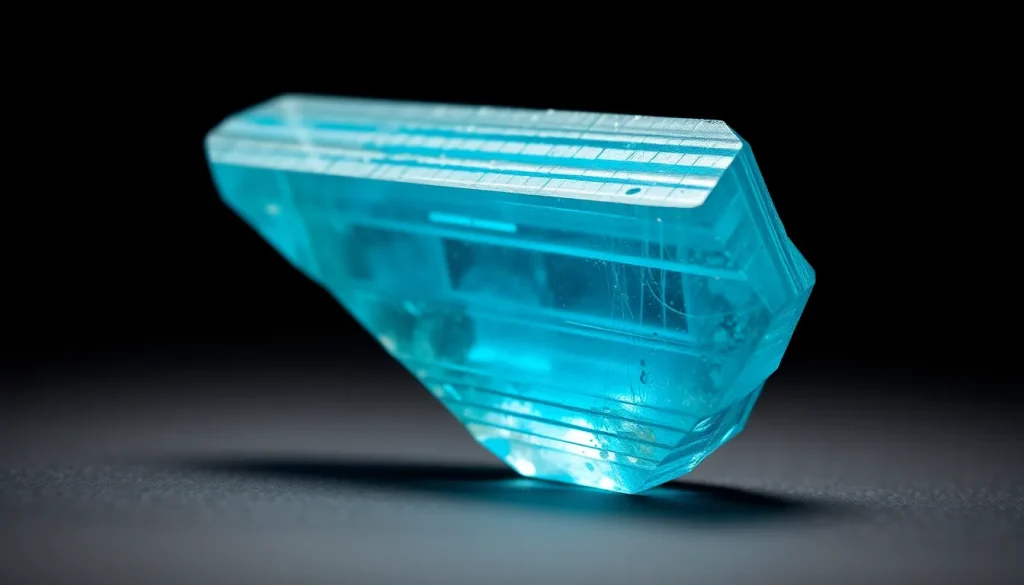
Narsarsukite is a relatively uncommon silicate mineral noted for its vivid blue to turquoise coloration. It belongs to the sorosilicate (disilicate) group and crystallizes in the orthorhombic system, often forming elongated prismatic crystals with a vitreous luster. With a Mohs hardness of 5 – 6, it is suitable for occasional jewelry pieces, especially pendants and earrings, though it requires careful handling.
History and Origin
The mineral was first described in 1900 from specimens collected near Narsarsuaq, Greenland, from which its name is derived. Subsequent discoveries have been reported from a handful of localities worldwide, including Norway, Russia’s Kola Peninsula, the United States (California), and Canada (British Columbia). Because the deposits are small and the crystals are often modest in size, Narsarsukite has remained a collector’s gem rather than a mainstream commercial gemstone.
Meaning and Symbolism
In traditional crystal lore, Narsarsukite is associated with clear communication, self‑expression, and the ability to articulate inner truth. Its cool blue tones are said to evoke the calm of water and sky, symbolizing emotional balance and mental clarity. Collectors often value the stone for its rarity and the sense of uniqueness it imparts.
Healing and Metaphysical Properties
Within crystal‑healing circles, Narsarsukite is believed to support the throat chakra, facilitating honest speech and creative expression. Practitioners claim it can aid in releasing suppressed emotions, enhancing intuition, and promoting mental focus. These properties are regarded as traditional beliefs and are not intended as medical advice.
Varieties and Types
While the mineral itself does not have widely recognized commercial varieties, color variations do occur:
- Blue Narsarsukite – the most common and sought‑after hue, ranging from sky‑blue to deep turquoise.
- Green‑Blue Narsarsukite – displays a subtle greenish tint, often observed in specimens from Norway.
- Brownish Narsarsukite – rare, with a muted brown‑yellow coloration, typically linked to iron impurities.
All varieties share the same crystal structure and chemical composition, with color differences arising from trace element substitutions.
Jewelry Uses and Care
Because of its moderate hardness, Narsarsukite is best suited for jewelry that experiences limited abrasion, such as pendants, brooches, and earrings set in protective settings. When incorporated into rings, a bezel or channel setting can help shield the stone from knocks.
Care recommendations:
- Clean with warm, soapy water and a soft brush; avoid ultrasonic cleaners.
- Dry thoroughly with a lint‑free cloth before storage.
- Store away from harder gemstones (e.g., quartz, topaz) to prevent scratching.
- Avoid prolonged exposure to harsh chemicals or high heat, which could affect surface luster.
Buying Guide
When purchasing Narsarsukite, consider the following factors:
- Color Saturation – deep, uniform blues are the most desirable.
- Clarity – look for specimens free of large inclusions or fractures.
- Cut and Setting – well‑cut stones display optimal brilliance; protective settings extend durability.
- Origin Documentation – reputable dealers should provide provenance, especially for stones from classic localities like Greenland.
- Treatment Disclosure – ensure the stone has not been artificially enhanced; natural Narsarsukite is rarely treated.
Because the market is niche, prices can vary widely. Obtain a written appraisal for high‑value pieces and consider having the stone examined by a certified gemologist for verification.
FAQ
What is Narsarsukite good for?
Narsarsukite is valued for its striking blue‑green color in jewelry and as a collector’s specimen. Traditionally, it is believed to aid communication and emotional balance, though these are metaphysical concepts, not medical facts.
Is Narsarsukite rare?
Yes, high‑quality Narsarsukite is rare. It occurs only in a few geographically limited deposits, and large, well‑colored crystals are especially uncommon, making the gemstone relatively scarce on the market.
How can you tell if Narsarsukite is real?
Authentic Narsarsukite displays a consistent blue‑turquoise hue, vitreous luster, and a hardness of 5‑6 on the Mohs scale. A professional gemologist can confirm identity through refractive index measurements and, if needed, spectroscopy.
What chakra is Narsarsukite associated with?
In crystal‑healing traditions, Narsarsukite is linked to the Throat Chakra (Vishuddhi), supporting clear expression and truthful communication.
How should you clean Narsarsukite?
Clean Narsarsukite gently with warm, mildly soapy water and a soft brush. Avoid ultrasonic cleaners, harsh chemicals, and high heat. Dry with a lint‑free cloth and store away from harder stones to prevent scratches.
Leave a Reply