Short Answer
Overview
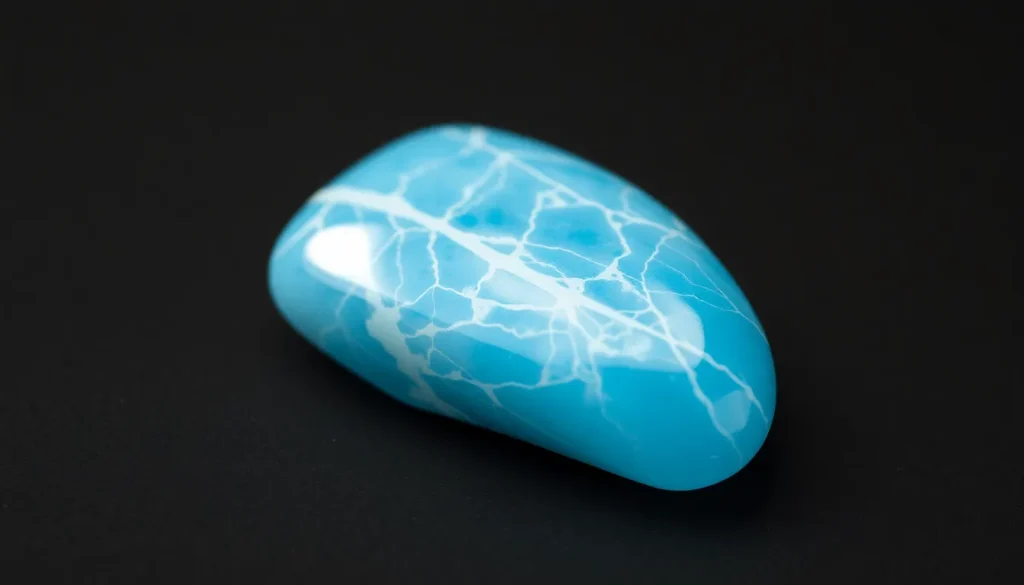
Larimar, often called the blue pectolite, is a rare gemstone prized for its vivid sky‑blue to turquoise coloration with white or gray lacing that resembles a calm sea horizon. Chemically it is a sodium calcium phyllosilicate (NaCa2Si3O8(OH)) and belongs to the pectolite mineral species. The stone is found exclusively in the Dominican Republic, making it a true national gem.
History and Origin
The name “Larimar” was coined in 1974 by Dominican geologist Félix Miguel and his wife Eugenia in honor of their daughter Larissa and the Spanish word “mar” (sea). The first notable discovery occurred in the 1970s in the Barahona Province, where volcanic ash and limestone host the mineral. Since then, Larimar has become a symbol of Dominican natural heritage and is used in national jewelry designs.
Meaning and Symbolism
Traditional beliefs attribute to Larimar qualities of tranquility, emotional balance, and clear communication. Its oceanic hues are said to evoke the calm of the sea, encouraging inner peace and the expression of truth. In contemporary jewelry marketing, it is often presented as a stone for fostering confidence and soothing anxiety.
Healing and Metaphysical Properties
Within crystal‑healing circles, Larimar is linked to the throat chakra and is believed to aid in verbal expression, creativity, and spiritual insight. Practitioners claim it can help release fear, promote gentle emotional healing, and support meditation by aligning the wearer with the element of water. These claims are not medical facts and should not replace professional health advice.
Varieties and Types
All Larimar specimens are varieties of pectolite; however, notable visual variations include:
- Deep Ocean Blue – intense, saturated blue with minimal white veining.
- Turquoise Sky – lighter turquoise with pronounced white or gray lacing that creates a cloud‑like pattern.
- Milky Larimar – predominantly milky or opaque with subtle blue undertones.
These differences are natural and not the result of treatment. Some stones may be heat‑treated to enhance color; reputable sellers disclose any such processes.
Jewelry Uses and Care
Because of its relatively low hardness (4.5–5 on the Mohs scale) and perfect cleavage in one direction, Larimar is best suited for earrings, pendants, necklaces, and brooches where impact risk is low. It should be set in protective settings—such as bezel or prong designs that shield the stone’s broad faces.
Cleaning: Use warm, soapy water and a soft brush. Avoid ultrasonic cleaners, steam, or harsh chemicals, which can damage the surface or alter any treatments.
Storage: Keep separate from harder gemstones (e.g., quartz, diamonds) to prevent scratches. Store in a soft pouch or a compartment with felt lining.
Buying Guide
When purchasing Larimar, consider the following:
- Origin verification – Authentic Larimar originates from the Dominican Republic. Request a provenance statement.
- Color consistency – Look for even, vivid blue hues with natural lacing; uneven color may indicate low quality or treatment.
- Clarity – Minor inclusions are common; however, large fractures or cloudiness reduce value.
- Cut and symmetry – Well‑cut stones display balanced proportions and protect the cleavage plane.
- Certification – Reputable dealers provide a gemological report or at‑least a written guarantee of authenticity.
Because the market is limited, prices can vary widely. Compare multiple sources and avoid offers that sound too good to be true.
FAQ
What is Larimar good for?
Larimar is valued for its striking blue color in jewelry and, according to traditional crystal‑healing beliefs, for promoting calm, clear communication, and emotional balance. It is not a substitute for medical treatment.
Is Larimar rare?
Larimar is relatively rare because it occurs only in the Dominican Republic. High‑quality stones with vivid color and minimal fractures are especially scarce, which can affect price and availability.
How can you tell if Larimar is real?
Real Larimar feels cool, has a vitreous luster, and displays natural white lacing. It should be sourced from the Dominican Republic and may be accompanied by a gemological certificate. Professional testing, such as refractive index measurement, confirms authenticity.
What chakra is Larimar associated with?
In crystal‑healing traditions Larimar is most commonly linked to the Throat chakra, supporting expression and communication. Some practitioners also associate it with the Heart chakra for emotional soothing.
How should you clean Larimar?
Clean Larimar gently with warm, soapy water and a soft brush. Avoid ultrasonic cleaners, steam, or harsh chemicals. Store it separately from harder gemstones to prevent scratches, and keep it in a soft pouch when not worn.
Leave a Reply