
Short Answer
Overview
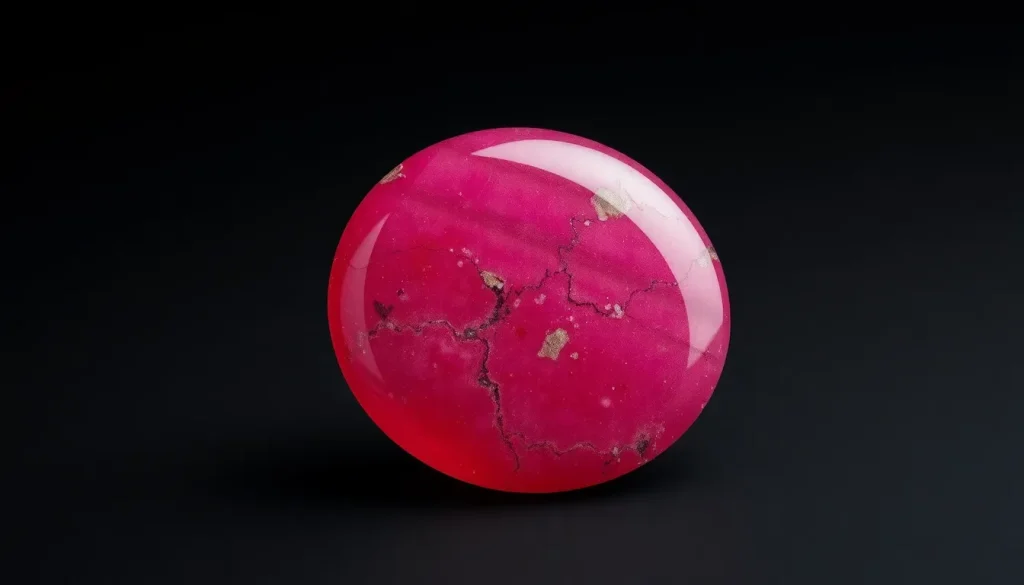
Pyroxmangite is a manganese silicate mineral with the chemical formula MnSiO3. It belongs to the pyroxenoid subgroup of silicates and crystallises in the orthorhombic system. Typically found in shades of pink, red, and brownish‑red, the stone is valued for its bright hue and relative rarity compared with its lower‑temperature polymorph, rhodonite.
On the Mohs hardness scale, pyroxmangite rates between 5.5 and 6.5, making it suitable for many types of jewelry when properly set. Its refractive index ranges from 1.72 to 1.77 and it displays a vitreous to sub‑adamantine luster. The mineral is transparent to translucent and exhibits perfect cleavage on the {010} plane, which influences how it is cut.
History and Origin
The name “pyroxmangite” derives from the Greek word pyrox (fire) and the element manganese, reflecting its formation at high temperatures in metamorphic environments. It was first described in the early 20th century from specimens in the Ural Mountains of Russia. Subsequent discoveries have identified significant occurrences in Yunnan Province (China), the Lombardy region (Italy), and several localities in the United States, notably California’s San Benito County.
Because pyroxmangite forms under specific temperature‑pressure conditions, it is often associated with manganese‑rich metamorphic rocks such as schists and marbles, where it can occur as prismatic crystals, massive aggregates, or fibrous nodules.
Meaning and Symbolism
In traditional gemstone lore, the vivid pink‑red colors of pyroxmangite are linked to love, compassion, and emotional balance. The stone is thought to encourage sincere communication and to help the wearer open their heart to others. It is occasionally cited as a symbol of inner strength, reflecting the mineral’s formation under intense geological heat.
Healing and Metaphysical Properties
Crystal‑healing practitioners associate pyroxmangite with the heart chakra, believing it can promote emotional healing, forgiveness, and self‑acceptance. Some claim the stone assists in reducing stress and amplifying creative energy. These uses are based on traditional beliefs and should not replace professional medical advice.
Varieties and Types
While pyroxmangite itself is a distinct mineral species, it can appear in several visual variants:
- Pure pink: Light, translucent crystals with a delicate rose hue.
- Reddish‑brown: Deeper tones often found in massive, opaque specimens.
- Gray‑tinged: Occurs when trace elements modify the color, producing a muted appearance.
These varieties are not separate species but reflect variations in trace impurities and growth conditions.
Jewelry Uses and Care
Due to its moderate hardness and perfect cleavage, pyroxmangite is best suited for settings that protect the stone from impact, such as bezel or pendant mounts. It is commonly used in:
- Faceted cabochons for earrings and pendants.
- Beaded necklaces where the stone is drilled with care.
- Inlay work where thin slices are set into metal.
Cleaning should be performed with warm, soapy water and a soft brush. Avoid ultrasonic cleaners and harsh chemicals, as they can exploit the cleavage planes and cause fractures. Store each piece separately in a soft pouch to prevent scratching.
Buying Guide
When purchasing pyroxmangite, consider the following criteria:
- Color intensity: Deep, even pink‑red hues are most desirable.
- Clarity: Inclusions are common; however, large fractures or cloudiness reduce value.
- Cut quality: Well‑cut stones will showcase the stone’s luster while minimizing stress on cleavage planes.
- Origin documentation: Reputable dealers often provide locality information, which can affect both price and authenticity.
- Treatments: Verify whether the stone has been heat‑treated or dyed, as untreated material commands a premium.
Always request a gem‑ological report from a recognized laboratory (e.g., GIA, IGI) for high‑value pieces. If buying online, ensure the seller offers a clear return policy and high‑resolution images from multiple angles.
FAQ
What is pyroxmangite good for?
Pyroxmangite is valued for its vivid pink‑red color in jewelry and as a collector’s mineral. Traditional crystal‑healing beliefs attribute it with heart‑chakra energy, promoting love and emotional balance, though these uses are not medically proven.
Is pyroxmangite rare?
High‑quality pyroxmangite is relatively rare. While the mineral occurs in several countries, specimens with deep, uniform color and good clarity are uncommon, making them more valuable than more abundant silicates.
How can you tell if pyroxmangite is real?
Authentic pyroxmangite exhibits a hardness of 5.5–6.5, perfect cleavage on {010}, and a refractive index around 1.72–1.77. A professional gemologist can confirm identity with a refractometer, specific gravity measurement, and, if needed, X‑ray diffraction.
What chakra is pyroxmangite associated with?
In crystal‑healing traditions, pyroxmangite is most commonly linked to the Heart (Anahata) chakra, reflecting its pink–red hues and associated emotional symbolism.
How should you clean pyroxmangite?
Clean pyroxmangite with warm, mild soap and a soft brush. Avoid ultrasonic cleaners, harsh chemicals, and high‑impact cleaning, as its perfect cleavage makes it vulnerable to chipping. Store separately in a soft pouch.
Leave a Reply