Short Answer
Overview
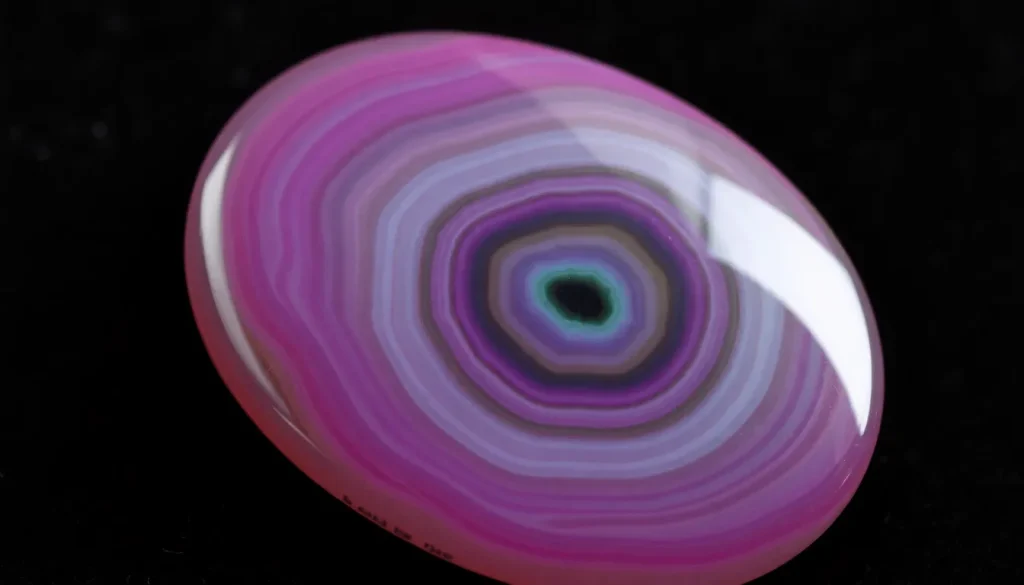
Iris agate is a banded form of chalcedony, a microcrystalline variety of quartz (SiO₂). It displays a striking play of colors—typically pink, purple, green, brown, and white—that radiate outward from a central point, reminiscent of the petals of an iris flower. The stone is valued for its decorative appeal in cabochons, beads, and ornamental objects.
History and Origin
The name “iris” was first applied in the early 20th century to agates that exhibited a vivid, iris‑like color pattern. Historically, agates have been used since antiquity for seals, cameos, and amulets. Iris agate specimens have been reported from Brazil, Uruguay, the United States (notably California), Madagascar, and parts of India. While the banding forms through rhythmic precipitation of silica in volcanic cavities, the specific mineral impurities give each iris agate its unique palette.
Meaning and Symbolism
In traditional gemstone lore, iris agate is associated with balance, inner vision, and emotional harmony. Its multicolored bands are said to symbolize the integration of opposing forces, encouraging the wearer to see situations from multiple perspectives. The stone is often given as a gift to support personal growth and creative expression.
Healing and Metaphysical Properties
Crystal‑healing practitioners describe iris agate as a stone that aids in emotional healing and spiritual insight. It is believed to stimulate the heart and third‑eye chakras, promoting compassion, intuition, and mental clarity. These claims are part of traditional belief systems and are not intended as medical advice.
Varieties and Types
While “iris agate” refers to the overall pattern, several sub‑varieties are recognized based on dominant hues:
- Pink‑dominant iris agate: Strong rose and magenta bands with subtle green highlights.
- Purple‑dominant iris agate: Deep violet to lavender layers, often with a creamy white base.
- Green‑dominant iris agate: Rich forest‑green bands interlaced with pink or brown.
All varieties share the same chemical composition and physical properties, differing only in trace mineral content that influences color.
Jewelry Uses and Care
Because of its moderate hardness (6.5–7 on the Mohs scale) and attractive banding, iris agate is commonly cut into cabochons, beads, and pendants. It is suitable for everyday wear when set in protective settings such as bezel or channel settings.
Care recommendations:
- Clean with warm, soapy water and a soft brush; avoid ultrasonic cleaners if the stone has been dyed or treated.
- Dry thoroughly with a lint‑free cloth to prevent water spots.
- Avoid prolonged exposure to harsh chemicals, acids, or high heat, as these can affect surface polish.
Buying Guide
When selecting iris agate, consider the following factors:
- Color intensity: Look for vivid, well‑defined bands without excessive cloudiness.
- Clarity: Minor inclusions are normal; large fractures or heavy veining may reduce value.
- Cut and polish: A high‑quality cabochon will showcase the concentric pattern with a smooth, glossy finish.
- Origin: Brazilian and Uruguayan specimens are widely available; provenance can affect price and collector interest.
- Treatment disclosure: Some iris agates are heat‑treated or dyed. Reputable dealers should disclose any enhancements.
For investment or collector purposes, request a gemological report that includes refractive index, specific gravity, and any treatment information.
FAQ
What is iris agate good for?
Iris agate is prized for its decorative use in jewelry and ornamental objects. Traditionally, it is believed to promote emotional balance and intuitive insight, though these effects are not scientifically verified.
Is iris agate rare?
Iris agate is not considered rare overall, but high‑quality specimens with vivid, well‑defined bands can be scarce and command higher prices, especially when sourced from renowned localities like Brazil.
How can you tell if iris agate is real?
Real iris agate will feel solid, have a waxy‑to‑vitreous luster, and display natural banding without uniform coloration. A professional gemologist can confirm authenticity using refractive index, specific gravity, and microscopic examination.
What chakra is iris agate associated with?
In crystal‑healing traditions, iris agate is often linked to the heart and third‑eye chakras, supporting compassion and intuition. No single standard chakra is universally accepted.
How should you clean iris agate?
Clean iris agate with warm, mildly soapy water and a soft brush. Rinse thoroughly, pat dry with a lint‑free cloth, and avoid ultrasonic cleaners, harsh chemicals, or extreme heat, especially if the stone has been dyed or treated.
Leave a Reply