
Short Answer
Overview
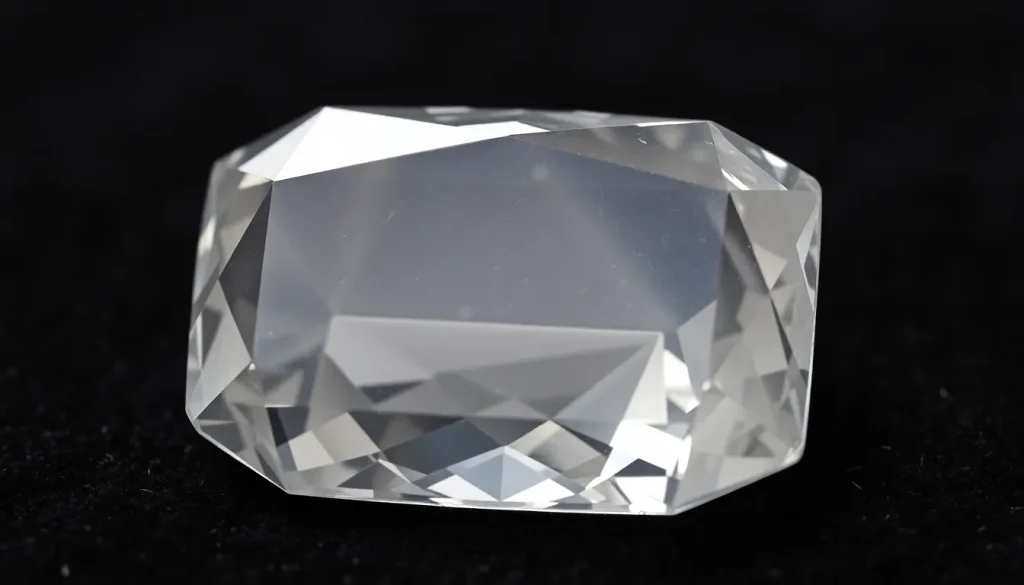
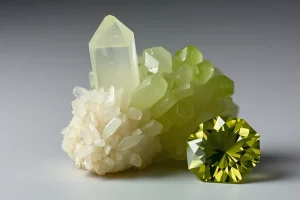
Anorthite is the calcium‑rich endmember of the plagioclase feldspar series, with the chemical formula CaAl₂Si₂O₈. It crystallises in the triclinic system and typically forms tabular or prismatic crystals that display perfect cleavage on two directions. In its gem‑quality form, anorthite appears transparent to translucent and ranges from colourless‑white to pale gray, with rare specimens showing a subtle blue or greenish tint.
History and Origin
The name “anorthite” derives from the Greek words an‑ (without) and orthos (right), referring to its occurrence in anorthosite – a coarse‑grained igneous rock composed almost entirely of this mineral. Anorthite was first described in the early 19th century from samples in Norway and Iceland. Geologically, it forms in high‑temperature, low‑silica magmas and is a major component of lunar highland rocks, making it of interest to both mineralogists and planetary scientists.
Meaning and Symbolism
In traditional gemstone lore, anorthite is associated with clarity of thought and inner balance. Its bright, unblemished appearance is said to symbolize honesty, purity, and a clear vision of one’s purpose. Because it is a member of the feldspar family, which bridges the earth and the sky in many cultural narratives, anorthite is sometimes viewed as a stone that helps integrate practical matters with higher aspirations.
Healing and Metaphysical Properties
Crystal‑healing practitioners attribute the following qualities to anorthite, describing them as beliefs rather than medical facts:
- Grounding and stability: The mineral’s dense, earth‑derived nature is thought to anchor scattered energy.
- Clarity of mind: Its transparency is believed to aid mental focus and decision‑making.
- Emotional balance: Some claim it can soothe anxiety and promote calm during stressful situations.
- Energy cleansing: Placed in a space, anorthite is said to absorb stagnant or negative vibrations.
These properties are rooted in folklore and contemporary crystal‑healing traditions; they are not substantiated by scientific research.
Varieties and Types
Anorthite itself is a pure calcium plagioclase, but it forms a continuous solid‑solution series with albite (the sodium‑rich endmember). In gem‑cut form, the most sought‑after specimens are:
- Clear anorthite: Rare, colourless crystals that can be faceted into brilliant or step cuts.
- Blue‑tinged anorthite: Occasionally found in volcanic rocks where trace elements impart a faint blue hue.
- Gray‑white anorthite: The most common, often used in ornamental lapidary work rather than fine jewelry.
Because anorthite belongs to the broader plagioclase group, it is sometimes confused with labradorite or moonstone, which are also feldspar varieties with distinct optical effects.
Jewelry Uses and Care
Although not as widely used as quartz or sapphire, anorthite can be fashioned into rings, pendants, earrings, and cabochons. Its moderate hardness (5.5–6 on the Mohs scale) requires careful setting to protect against scratches. Recommended settings include bezel or protective halo designs that shield the stone’s edges.
Care instructions:
- Clean with lukewarm water, a mild detergent, and a soft brush. Avoid ultrasonic cleaners, which may exacerbate cleavage planes.
- Store separately from harder gemstones such as topaz or diamonds to prevent abrasion.
- Do not expose to harsh chemicals, acids, or prolonged heat, as these can alter the surface polish.
Buying Guide
When purchasing anorthite, consider the following factors:
- Clarity: Look for specimens free of major inclusions, as fissures can weaken the stone.
- Cut quality: Well‑proportioned facets enhance brilliance; avoid overly deep cuts that may reveal internal fractures.
- Colour consistency: Uniform colour, especially in clear or lightly tinted stones, increases value.
- Origin documentation: Reputable dealers often provide locality information; common sources include Iceland, the Kola Peninsula (Russia), Norway, and Canada (Nunavut).
- Treatment disclosure: Anorthite is rarely treated, but any heating or surface coating should be disclosed by the seller.
Because anorthite is not a mainstream commercial gemstone, prices vary widely. Expect modest pricing for common gray specimens and higher premiums for rare clear or blue varieties.
FAQ
What is anorthite good for?
Anorthite is valued for its clear, glassy appearance and is used in ornamental lapidary work and occasional fine jewelry. Traditionally, it is believed to promote mental clarity and grounding, though these are metaphysical claims, not medical facts.
Is anorthite rare?
High‑quality, transparent anorthite is relatively rare because the mineral commonly occurs in opaque gray masses. Rarity increases for clear or blue‑tinged specimens, especially those free of fractures.
How can you tell if anorthite is real?
Real anorthite displays perfect cleavage on two planes, a vitreous luster, and a Mohs hardness of 5.5–6. Professional gemologists use refractive index measurements and X‑ray diffraction to confirm its identity.
What chakra is anorthite associated with?
In crystal‑healing traditions, anorthite is sometimes linked to the Crown Chakra, reflecting its association with higher consciousness and clarity, though no single standard chakra assignment exists.
How should you clean anorthite?
Clean anorthite gently with lukewarm water, mild soap, and a soft brush. Avoid ultrasonic cleaners and harsh chemicals. Store it separately from harder gemstones to prevent scratches.
Leave a Reply