Short Answer
Overview
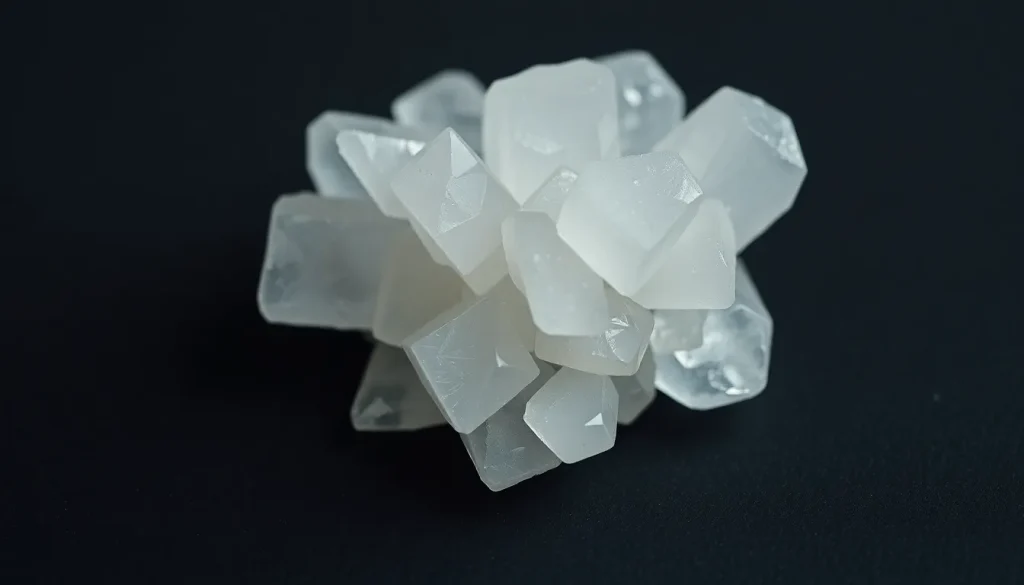
Milky quartz is a common, opaque to translucent variety of quartz (SiO₂) characterized by a white, milky appearance caused by microscopic fluid inclusions or gas bubbles trapped during crystal growth. It belongs to the quartz family of tectosilicates and shares the same hardness (Mohs 7) and crystal structure as clear quartz, but its light‑scattering inclusions give it a soft, cloud‑like look.
History and Origin
Milky quartz has been used since antiquity for ornamental and ritual purposes. Archaeological finds from ancient Egypt, Mesopotamia, and pre‑Columbian America show milky quartz beads and small carved objects. Because of its abundance, it was often a substitute for more expensive white gems such as moonstone. In modern times the stone has become popular in Art Deco jewelry and in contemporary crystal‑healing practices.
Meaning and Symbolism
Traditional belief holds that milky quartz embodies purity, calm, and inner clarity. It is thought to smooth emotional turbulence, promote mental focus, and act as a gentle amplifier of intention. In many cultures the stone is associated with the moon and feminine energy, symbolizing new beginnings and emotional balance.
Healing and Metaphysical Properties
Within crystal‑healing circles, milky quartz is said to clear mental fog, aid meditation, and support the Crown Chakra, helping to connect the wearer with higher consciousness. Practitioners claim it can absorb negative energies, soothe stress, and foster a sense of peace. These attributes are based on tradition and personal testimony, not medical evidence.
Varieties and Types
Milky quartz includes several sub‑varieties that differ mainly in the nature of their inclusions:
- Snow Quartz – Very fine, evenly dispersed inclusions giving a uniformly white look.
- Cloud Quartz – Contains larger, cloud‑like inclusions that may appear as wispy patterns.
- Phantom Milky Quartz – Shows ghostly outlines of earlier crystal stages within the milky matrix.
All share the same chemical composition but vary in translucency and visual character.
Jewelry Uses and Care
Because of its durability and affordable price, milky quartz is used in rings, pendants, earrings, and decorative objects. It can be faceted, cabochon‑cut, or left in natural crystal form. Care recommendations:
- Clean with warm, soapy water and a soft brush; avoid harsh chemicals.
- Polish with a microfiber cloth; ultrasonic cleaners are safe if the stone is untreated.
- Avoid prolonged exposure to high heat (above 300 °C) as it may cause fracturing.
Milky quartz is not porous, so it resists staining, but surface scratches can appear over time with heavy wear.
Buying Guide
When selecting milky quartz, consider the following factors:
- Clarity of milky tone – Uniform, even color is usually more desirable.
- Cut and finish – Well‑polished surfaces enhance the stone’s glow.
- Origin – Reputable sources (e.g., Brazil, USA, Madagascar) often provide better‑quality material.
- Treatment disclosure – Most milky quartz is natural, but some may be heat‑treated to improve whiteness; ask the seller.
Request a certificate of authenticity or a gem‑lab report for high‑value pieces, especially when the stone is used in fine jewelry.
FAQ
What is milky quartz good for?
Milky quartz is valued for its durability in jewelry, its gentle aesthetic in decorative objects, and, in traditional crystal‑healing belief, for promoting calm and mental clarity.
Is milky quartz rare?
Milky quartz is relatively common; high‑quality, uniformly milky stones from reputable localities are more sought after, but the variety is not considered rare.
How can you tell if milky quartz is real?
Real milky quartz feels cool, has a vitreous luster, and a hardness of 7. Look for natural inclusions and a conchoidal fracture. Professional testing (e.g., refractive index measurement) confirms authenticity.
What chakra is milky quartz associated with?
Traditional crystal‑healing sources associate milky quartz with the Crown Chakra, believed to aid spiritual connection and mental clarity.
How should you clean milky quartz?
Clean milky quartz with warm soapy water and a soft brush, rinse thoroughly, and dry with a lint‑free cloth. Avoid harsh acids, and do not expose the stone to sudden temperature changes.
Leave a Reply