
Short Answer
Overview
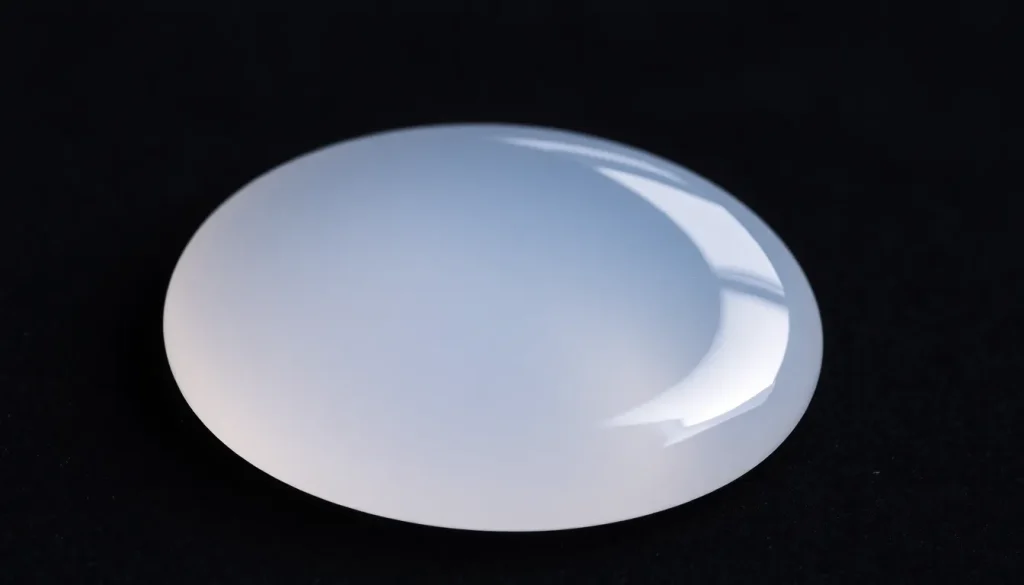
Meionite is a member of the scapolite mineral group, classified as a calcium‑aluminum silicate carbonate (Ca4Al6Si6O24(CO3)). It forms in metamorphic environments, especially in skarn deposits, and is prized for its often clear to milky appearance. The stone is usually cut as a cabochon or used as small faceted gems in jewelry.
History and Origin
The name “meionite” derives from the Greek word meion meaning “less,” reflecting its lower calcium content compared with the related mineral marialite. First described in the early 19th century from specimens in the Austrian Alps, meionite has since been reported from metamorphic terranes worldwide, including Italy, the United States, Canada, Brazil, Russia, and Finland.
Meaning and Symbolism
In traditional gemstone symbolism, meionite is associated with clarity of thought and the pursuit of truth. Its often transparent or milky look is said to represent purity and inner vision. Collectors value the stone for its understated beauty and its connection to intellectual pursuits.
Healing and Metaphysical Properties
Crystal‑healing practitioners attribute meionite with the ability to enhance mental focus, aid in decision‑making, and promote spiritual growth. It is believed to support the Crown chakra, helping users access higher states of consciousness. These claims are part of traditional belief systems and are not medical advice.
Varieties and Types
Meionite occurs in several visual varieties:
- Colourless/White Meionite – Clear to milky, often used for cabochons.
- Grey Meionite – Light to medium gray, sometimes with a faint pink hue.
- Pink‑ish Meionite – Rare, displaying a delicate rose tint.
All varieties share the same chemical composition but differ in trace element content and formation conditions.
Jewelry Uses and Care
Because of its 5.5–6 Mohs hardness, meionite is suitable for earrings, pendants, and brooches where it is less likely to be subjected to heavy impact. It is commonly cut as a polished cabochon to showcase its translucency. Care guidelines include:
- Avoid exposure to harsh chemicals or ultrasonic cleaners that could aggravate existing fractures.
- Clean gently with warm, soapy water and a soft brush.
- Store separately from harder gemstones to prevent scratching.
Buying Guide
When purchasing meionite, consider the following factors:
- Clarity – Look for stones free of visible inclusions or cracks.
- Color – Colourless and white specimens are most sought after; pink or gray stones are rarer and may command higher prices.
- Cut – Well‑polished cabochons or precision‑cut facets indicate quality workmanship.
- Origin – Documentation from reputable dealers can verify locality, which can affect value.
- Treatment Disclosure – Ensure any heat or surface treatments are disclosed; untreated meionite is generally preferred.
Professional appraisal or gem‑lab certification (e.g., GIA) is recommended for high‑value pieces.
FAQ
What is Meionite good for?
Meionite is valued for its clear to milky appearance in jewelry and as a collector's mineral. Traditionally, it is believed to aid mental clarity and spiritual insight, though these properties are based on crystal‑healing folklore, not scientific evidence.
Is Meionite rare?
Meionite is moderately rare. High‑quality, transparent specimens are less common than colored or opaque material, and fine‑cut cabochons are especially sought after. Rarity varies by locality, with some deposits (e.g., Austrian Alps) producing more collectible stones.
How can you tell if Meionite is real?
Real meionite is typically transparent to translucent with a white streak and perfect cleavage in two directions. It has a Mohs hardness of 5.5‑6, so it can be scratched by quartz. Professional testing—such as refractive index measurement or X‑ray diffraction—provides definitive identification.
What chakra is Meionite associated with?
In crystal‑healing traditions, Meionite is most often linked to the Crown Chakra, supporting higher consciousness and spiritual connection.
How should you clean Meionite?
Clean Meionite gently with warm, soapy water and a soft brush. Avoid ultrasonic cleaners and harsh chemicals, as the stone can be fragile along its cleavage planes. Store it separately from harder gemstones to prevent scratching.
Leave a Reply