
Short Answer
Overview
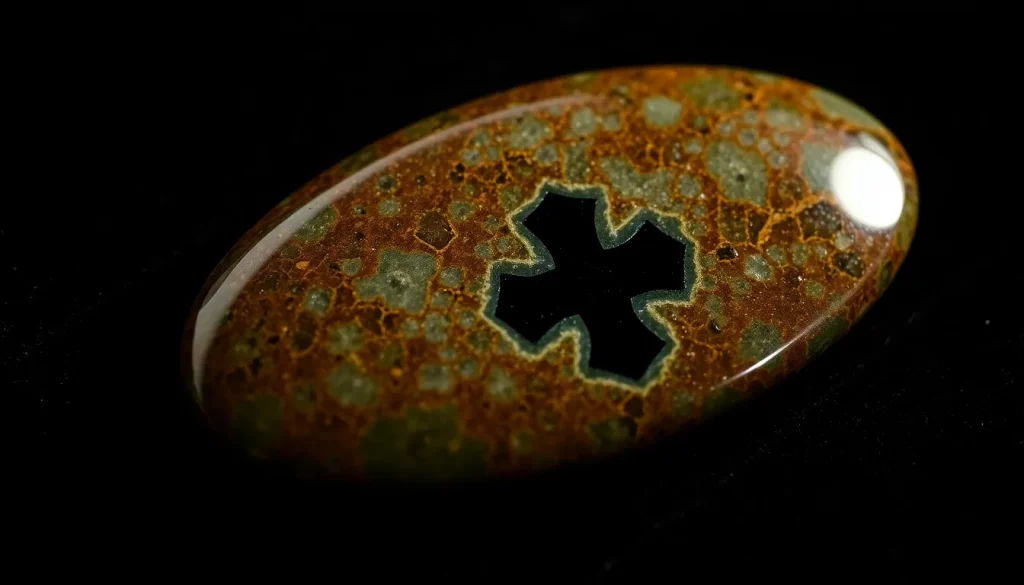
Chiastolite is a brown‑to‑green variety of the silicate mineral andalusite (Al₂SiO₅) that displays a distinctive black, cross‑shaped inclusion pattern when cut in cabochon or polished form. The cross, formed by graphite or other carbonaceous material, gives the stone its name—derived from the Greek word “chiastos” meaning “crossed”. With a Mohs hardness of 6.5–7.5, chiastolite is suitable for many types of jewelry, especially pieces that showcase its unique pattern.
History and Origin
The first documented occurrences of chiastolite were in the Värmland province of Sweden, where miners noted the stone’s cross‑like figures and referred to it as “cross‑stone”. Similar specimens have been reported from Brazil, the Ural Mountains of Russia, the Appalachian region of the United States, and Ontario, Canada. Historically the stone was used as a talisman and later entered the gem market in the early 20th century, where it was cut into cabochons for decorative use.
Meaning and Symbolism
In traditional folklore, the black cross was interpreted as a protective sign, symbolising balance between light and darkness. Chiastolite is often associated with concepts of direction, purpose and inner guidance. Collectors value the stone for its “crossroads” symbolism, believing it can help the wearer make clear decisions.
Healing and Metaphysical Properties
Within crystal‑healing circles, chiastolite is said to promote grounding, courage and the ability to navigate life’s crossroads. Practitioners claim it can aid in aligning the root chakra, strengthening personal boundaries, and encouraging perseverance during challenging times. These beliefs are not medically verified and should not replace professional health care.
Varieties and Types
- Standard chiastolite – typical brownish‑green to gray matrix with a black cross.
- Green chiastolite – richer green hues, often found in Brazilian deposits.
- Colorless chiastolite – rare, nearly transparent material where the cross is still visible.
- Heat‑treated chiastolite – some stones are gently heated to enhance color contrast; such treatment should be disclosed by sellers.
Jewelry Uses and Care
Because of its moderate hardness, chiastolite works well in settings that protect the stone, such as bezel or pendant mounts. It is commonly fashioned into cabochons, beads, and ornamental inlays. Care instructions:
- Avoid harsh chemicals and ultrasonic cleaners; use mild soap and a soft brush.
- Wipe with a lint‑free cloth after each wear.
- Store separately from harder gemstones (e.g., quartz, topaz) to prevent scratching.
- If the stone has been heat‑treated, handle with extra care to avoid sudden temperature changes.
Buying Guide
When purchasing chiastolite, consider the following factors:
- Cross visibility – a well‑defined black cross is the hallmark of quality.
- Color saturation – vibrant brown‑green tones are preferred over dull gray.
- Cut – cabochons that display the cross centrally are most desirable.
- Treatment disclosure – reputable dealers will state if the stone has been heat‑treated or enhanced.
- Certification – for high‑value pieces, a gemological report from a recognized laboratory (e.g., GIA) offers assurance of authenticity.
FAQ
What is chiastolite good for?
Chiastolite is prized for its unique black cross pattern, making it popular in jewelry and ornamental objects. Traditional crystal‑healing beliefs attribute grounding and decision‑making support to the stone, but these are not medical facts.
Is chiastolite rare?
Chiastolite is not among the rarest gemstones, but high‑quality specimens with a clear, centrally located cross and vivid color are less common and can command higher prices.
How can you tell if chiastolite is real?
Authentic chiastolite shows a distinct black cross within a brown‑green matrix, has a Mohs hardness of 6.5–7.5, and feels cool to the touch. Professional gemological testing (e.g., refractive index, specific gravity) confirms its identity.
What chakra is chiastolite associated with?
In crystal‑healing traditions chiastolite is often linked to the Root (Muladhara) chakra for grounding, though there is no scientific basis for this association.
How should you clean chiastolite?
Clean chiastolite with warm soapy water and a soft brush, then dry with a lint‑free cloth. Avoid ultrasonic cleaners, harsh chemicals, and sudden temperature changes, especially if the stone has been heat‑treated.
Leave a Reply