Short Answer
Overview
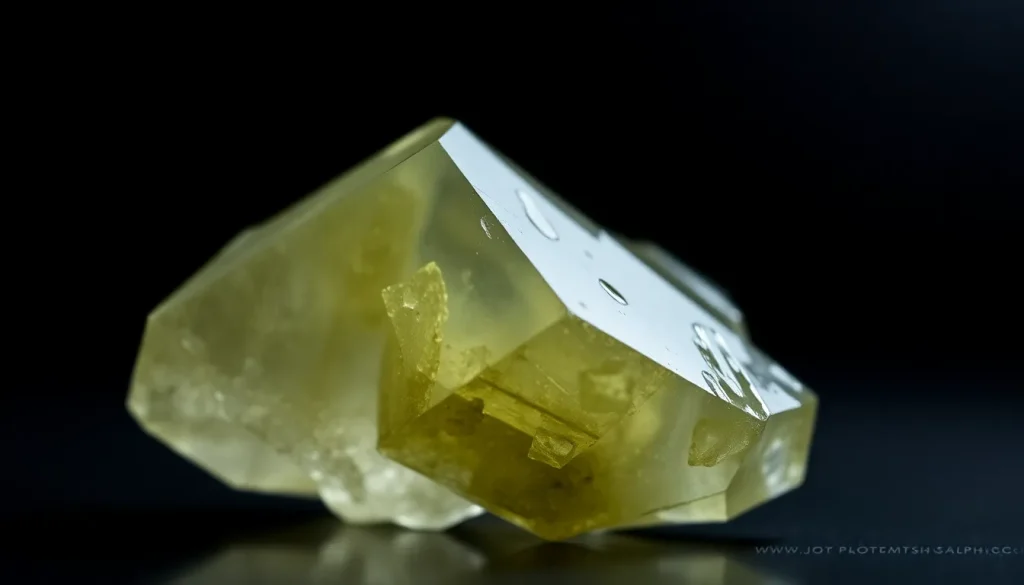
Tinaksite is a rare silicate mineral that belongs to the cyclosilicate group. Its chemical composition is typically expressed as Na₂Fe²⁺TiSi₄O₁₂, indicating the presence of sodium, ferrous iron, titanium and silicon. The mineral forms well‑developed, prismatic crystals that are commonly green, brownish‑green or yellowish in color. With a Mohs hardness of approximately 5.5–6 and a vitreous luster, tinaksite is occasionally cut as a gemstone, although its rarity limits widespread use in commercial jewelry.
History and Origin
The name “tinaksite” derives from the type locality near the Tinak River in the Kola Peninsula of north‑western Russia, where the mineral was first described in the early 1960s. Subsequent occurrences have been reported from alkaline pegmatites and granitic complexes in other parts of Russia, as well as from a few localities in Canada (Ontario) and Norway. Because the mineral forms in highly evolved, sodium‑rich environments, it is considered an indicator of unusual geological conditions.
Meaning and Symbolism
In traditional gemstone lore, tinaksite is associated with growth, renewal and inner balance. Its greenish tones are thought to reflect the energy of nature, encouraging personal development and a sense of grounding. Collectors often view the stone as a symbol of rarity and uniqueness, valuing its obscure heritage and distinctive crystal habit.
Healing and Metaphysical Properties
Crystal‑healing practitioners attribute tinaksite with several metaphysical qualities. It is believed to support the heart chakra, promoting emotional openness, compassion and the release of old patterns. Some claim that the stone can aid in detoxification, boost vitality, and assist in aligning the physical and subtle bodies. These properties are based on traditional beliefs and are not intended as medical advice.
Varieties and Types
Tinaksite specimens display a limited range of colors, most commonly:
- Olive‑green to dark green
- Brownish‑green or yellow‑green
- Rare pale yellow or colorless crystals
Variations are primarily controlled by the amount of iron and titanium present, as well as trace elements that may cause subtle hue shifts. The mineral is generally transparent to translucent, and well‑formed crystals may exhibit a faint pleochroism under polarized light.
Jewelry Uses and Care
Because of its moderate hardness, tinaksite is best suited for pendants, earrings and loose stones rather than high‑wear items like rings. It is often cut as a cabochon to showcase its color and internal clarity. When set in jewelry, the stone should be protected from harsh impacts and prolonged exposure to chemicals that could alter its surface.
Care guidelines:
- Clean with warm, soapy water and a soft brush; avoid ultrasonic cleaners.
- Store separately from harder gemstones to prevent scratching.
- Avoid prolonged contact with acids, chlorine or abrasive cleaners.
Buying Guide
When evaluating tinaksite, consider the following factors:
- Color and Transparency: Deep, even green tones with good translucency are most prized.
- Crystal Quality: Well‑formed, inclusion‑free crystals command higher value.
- Cut and Setting: Professional cabochon cuts that enhance color are preferred.
- Origin Documentation: Reputable dealers should provide provenance, especially for Russian type‑locality material.
- Certification: Gemological laboratory reports confirming the mineral species and any treatments add confidence.
n
Because tinaksite is uncommon, prices can vary widely. Expect higher costs for larger, vivid, and well‑cut specimens.
FAQ
What is tinaksite good for?
Tinaksite is prized by collectors for its rarity and distinctive green hues, and it is occasionally used in pendants or earrings. Traditional crystal‑healing beliefs also associate it with emotional balance and heart‑chakra work.
Is tinaksite rare?
Yes. High‑quality tinaksite is uncommon because it forms only in specialized, sodium‑rich alkaline pegmatites. Large, vivid, and well‑cut specimens are especially scarce.
How can you tell if tinaksite is real?
Authentic tinaksite displays a tetragonal crystal habit, a vitreous luster, and a refractive index around 1.68–1.71. A professional gemological laboratory can confirm its identity with optical and chemical analysis.
What chakra is tinaksite associated with?
In crystal‑healing traditions tinaksite is linked to the Heart (Anahata) chakra, promoting emotional openness and compassion.
How should you clean tinaksite?
Clean tinaksite gently with warm, mild soapy water and a soft brush. Avoid ultrasonic cleaners, harsh chemicals, and prolonged exposure to acids, as the stone can be sensitive to surface damage.
Leave a Reply