
Short Answer
Overview
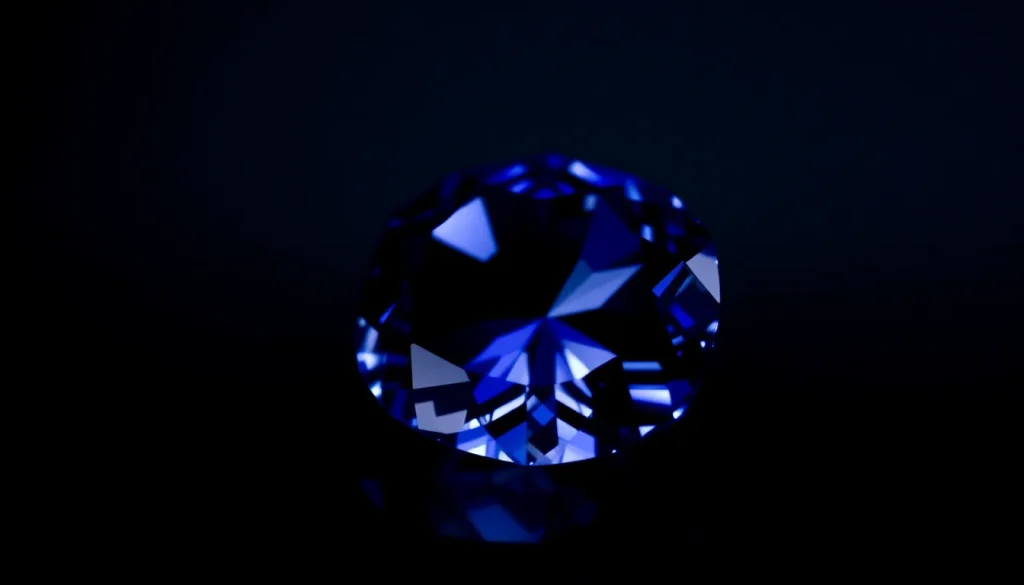
Tanzanite is the trade name for a vivid blue‑violet variety of the mineral zoisite (Ca2Al3(SiO4)(Si2O7)O(OH)). Naturally occurring in a limited region of northern Tanzania, the stone is prized for its strong trichroism – displaying blue, violet, and burgundy hues depending on orientation – and its high dispersion after heat treatment, which gives it a fire comparable to that of sapphire.
History and Origin
The first recorded discovery of tanzanite dates to 1967 when Manuel d’Souza, a Maasai herdsman, showed a blue stone to a local geologist. In 1968 the gem was introduced to the world market under the name “tanzanite” by Tiffany & Co., a name coined to honor its country of origin. The only commercial source is the Merelani Hills in the Manyara Region of Tanzania; smaller occurrences have been reported in Kenya and Madagascar but are not economically viable.
Meaning and Symbolism
Traditionally, tanzanite is associated with transformation, intuition, and spiritual awakening. Its deep blue hues are said to evoke calmness and inner peace, while the violet tones symbolize higher consciousness and the bridge between the material and spiritual realms. In contemporary jewelry marketing, tanzanite is often presented as a symbol of rare beauty and a reminder to cherish fleeting moments.
Healing and Metaphysical Properties
In crystal‑healing circles, tanzanite is believed to stimulate the third‑eye chakra, enhancing psychic perception and meditation. Practitioners claim it can aid in communication, reduce stress, and promote emotional balance. These attributes are viewed as traditional beliefs and are not supported by medical evidence; tanzanite should not replace professional health care.
Varieties and Types
-
- Natural Tanzanite – Rarely found in the market; retains its original pale blue‑violet color and requires no treatment.
n
- Heat‑treated Tanzanite – The vast majority of gem‑grade tanzanite is heated to 600–650 °C to develop its vivid blue‑violet color and improve clarity.
- Enhanced or Dyed Tanzanite – Occasionally, stones are subjected to surface treatments to intensify color; such treatments should be disclosed by the seller.
- Blue Zoisite (Untreated) – The mineral before heat treatment, usually appearing pale greenish‑gray and not valuable as a gemstone.
Jewelry Uses and Care
Because of its relative hardness (6.5–7 on the Mohs scale) and perfect {001} cleavage, tanzanite is best set in protective settings such as bezel or prong designs that keep the stone secure. It is popular in earrings, pendants, rings, and cocktail jewelry. Care recommendations include:
- Clean with warm, soapy water and a soft brush; avoid ultrasonic cleaners if the stone is untreated.
- Dry with a lint‑free cloth; store separately from harder gemstones to prevent scratching.
- Avoid prolonged exposure to direct sunlight, which can fade untreated material over time.
Buying Guide
When purchasing tanzanite, consider the following factors:
- Color Saturation – Deep, vivid blue‑violet with minimal gray is most desirable.
- Clarity – Inclusions are common; a clean appearance enhances value.
- Cut – Well‑proportioned cuts (oval, cushion, emerald) maximize brilliance and showcase trichroism.
- Treatment Disclosure – Reputable dealers will state whether the stone is heat‑treated or otherwise enhanced.
- Certification – Gemological certificates (GIA, IGI) provide assurance of authenticity and treatment status.
Because tanzanite is sourced from a single locality, supply can fluctuate, influencing price. Buying from a trusted jeweler with a clear return policy is advisable.
FAQ
What is tanzanite good for?
Tanzanite is prized for its striking blue‑violet color in fine jewelry and is traditionally believed to enhance intuition and emotional balance, though these claims are not medically proven.
Is tanzanite rare?
High‑quality tanzanite is relatively rare because it is sourced from a single Tanzanian locality, and only a small percentage of rough yields gem‑grade stones after heat treatment.
How can you tell if tanzanite is real?
Real tanzanite displays strong trichroism, a high refractive index, and perfect cleavage. Professional testing, such as spectroscopy or certification by a gemological laboratory, provides definitive authentication.
What chakra is tanzanite associated with?
In crystal‑healing traditions, tanzanite is linked to the Third Eye chakra and is also said to support the Throat chakra for clear communication.
How should you clean tanzanite?
Clean tanzanite gently with warm, mild soap and a soft brush. Avoid ultrasonic cleaners for untreated stones, and store separately from harder gems to prevent scratches.
Leave a Reply