
Short Answer
Overview
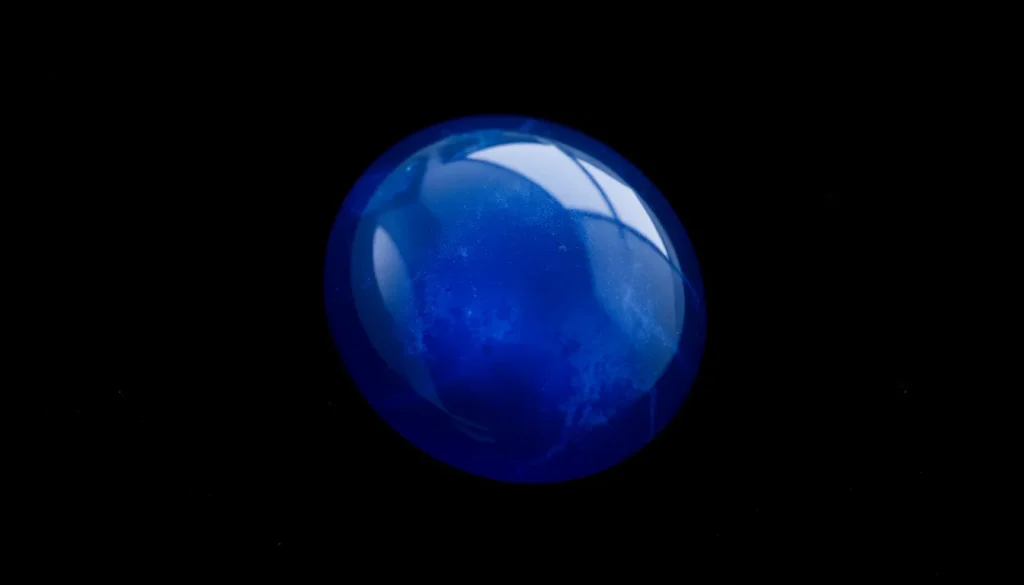
Afghanite is a member of the cancrinite group of framework silicates. It typically occurs as deep blue to violet crystals with a vitreous luster and a white streak. The mineral’s chemical composition can be expressed as (Na,K)Ca2Al3Si3O12Cl, indicating the presence of sodium, potassium, calcium, aluminum, silicon, oxygen and chlorine. Its crystal system is hexagonal and it ranks about 5–6 on the Mohs hardness scale, making it suitable for cabochon work but less ideal for faceted jewelry that requires higher durability.
History and Origin
The name “Afghanite” derives from its type locality in the Khorasan region of Afghanistan, where it was first described in the early 1960s. The mineral is formed in low‑temperature hydrothermal veins and in the cavities of volcanic rocks, often associated with other zeolitic minerals. Although the original deposits are Afghan, similar occurrences have been reported from Pakistan, Japan, and a few localities in the United States (Nevada). Because Afghanite is relatively scarce and its gem‑quality crystals are limited in size, it has remained a collector’s specialty rather than a mainstream gemstone.
Meaning and Symbolism
In traditional gemstone lore, Afghanite’s rich blue‑violet hue is associated with insight, intuition, and calm communication. It is thought to encourage honest self‑expression and to aid in the articulation of inner thoughts. The stone’s rarity adds a sense of uniqueness and personal empowerment for those who wear it.
Healing and Metaphysical Properties
Crystal‑healing enthusiasts attribute the following properties to Afghanite, though these are not supported by scientific evidence:
- Emotional balance: Believed to soothe anxiety and promote inner peace.
- Intuitive development: Said to stimulate the third‑eye and throat chakras, enhancing psychic perception and clear communication.
- Physical support: Some claim it assists the respiratory system and alleviates tension in the neck and shoulders.
These uses are based on traditional beliefs and should not replace professional medical advice.
Varieties and Types
Afghanite does not have widely recognized commercial varieties, but subtle differences may be observed:
- Blue Afghanite – Dominant deep blue coloration, often the most sought after for jewelry.
- Violet Afghanite – Displays a purplish hue, sometimes with a slight lavender sheen.
- Mixed‑tone specimens – Show zones of blue transitioning to violet, creating a natural “color‑play” effect.
All varieties share the same basic chemical formula and crystal structure; variations are due to trace element content and differing formation conditions.
Jewelry Uses and Care
Because Afghanite is relatively soft (Mohs 5–6) and exhibits perfect basal cleavage, it is most commonly set as a cabochon or in protective bezel settings. It is unsuitable for high‑impact rings or bracelets that endure heavy wear. When incorporated into pendants, earrings, or brooches, the stone’s color is best displayed against dark metal backgrounds.
Care instructions:
- Clean with a soft, lint‑free cloth and mild warm soapy water. Avoid ultrasonic cleaners, as vibration can cause cleavage.
- Do not expose to harsh chemicals, acids, or prolonged sunlight, which may fade the color over time.
- Store separately from harder gemstones (e.g., quartz, topaz) to prevent scratching.
Buying Guide
When purchasing Afghanite, consider the following factors:
- Color saturation: Deep, uniform blue or violet without cloudy inclusions is most valuable.
- Clarity: Since the stone is often translucent, visible cracks or cloudiness reduce desirability.
- Cut quality: A well‑polished cabochon will enhance color depth and surface smoothness.
- Origin documentation: Reputable dealers should provide provenance, especially for Afghan or Pakistani material.
- Treatment disclosure: Afghanite is rarely treated, but any heat or dyeing should be fully disclosed.
Because of its rarity, Afghanite can command premium prices for high‑quality pieces. Always seek certification from a recognized gem‑testing laboratory when possible.
FAQ
What is Afghanite good for?
Afghanite is valued for its striking blue‑violet color in cabochon jewelry and is traditionally believed to aid clear communication and intuition, though it has no proven medical benefits.
Is Afghanite rare?
High‑quality Afghanite is rare because gem‑grade crystals are limited in size and occur only in a few localities, making fine specimens relatively scarce on the market.
How can you tell if Afghanite is real?
Authentic Afghanite displays a uniform deep blue‑violet hue, a white streak, and a hardness of about 5–6. Professional gemologists can confirm its identity with refractive index and chemical analysis.
What chakra is Afghanite associated with?
In crystal‑healing traditions Afghanite is linked to the Throat (Vishuddhi) chakra, supporting honest expression and listening.
How should you clean Afghanite?
Clean Afghanite gently with warm soapy water and a soft cloth; avoid ultrasonic cleaners, harsh chemicals, and prolonged exposure to direct sunlight to preserve its color and structural integrity.
Leave a Reply