
Short Answer
Overview
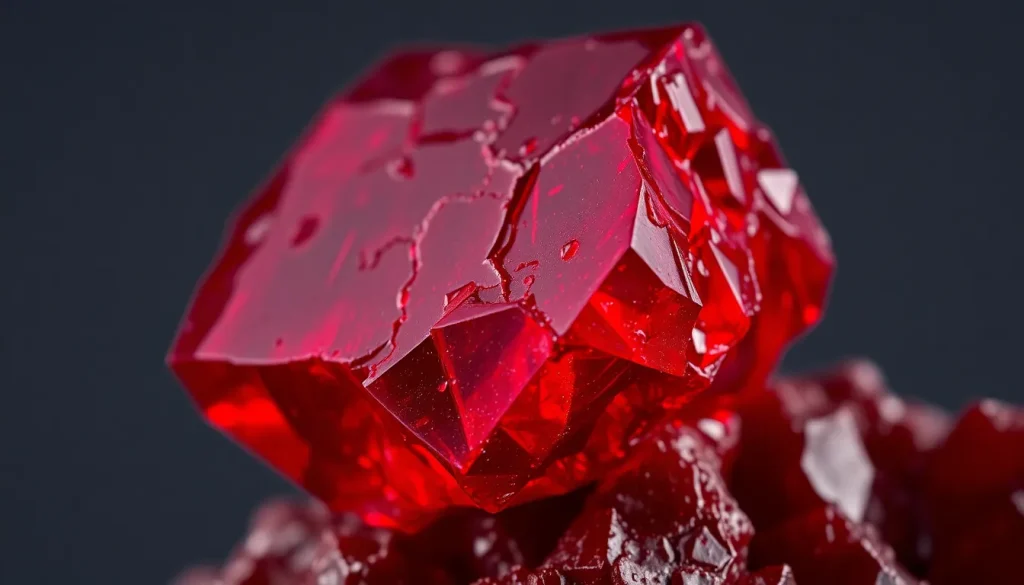
Cuprite is a copper(I) oxide mineral with the chemical formula Cu₂O. It crystallizes in the isometric (cubic) system and is best known for its intense, deep‑red to reddish‑brown coloration and metallic luster. The mineral ranks 3.5–4 on the Mohs hardness scale, making it relatively soft for a gemstone. Its high specific gravity (≈6.0) and a refractive index above 2.5 give cuprite a striking brilliance when cut as a cabochon or polished slice.
History and Origin
Cuprite has been recognized since the 19th century as a collector’s mineral and occasional ornamental stone. Early European mineralogists noted its occurrence in oxidized copper ore bodies, and it was sometimes called “copper ruby” because of its vivid hue. Natural specimens are found worldwide wherever copper deposits have undergone oxidation, especially in arid or semi‑arid climates that promote the formation of secondary copper oxides.
Meaning and Symbolism
Traditionally, cuprite is associated with passion, vitality, and protective energy. Its fiery red color is said to symbolize the life‑force and courage, making it a popular talisman for those seeking confidence and motivation. In cultural folklore, the stone has been linked to the heart’s emotional center, representing love that is both powerful and protective.
Healing and Metaphysical Properties
Within crystal‑healing traditions, cuprite is believed to:
- Amplify personal power and will, helping the wearer overcome fear and self‑doubt.
- Stimulate the heart and root chakras, encouraging emotional balance and grounding.
- Support the circulatory system and promote the healthy flow of blood, according to traditional belief (not a medical claim).
- Assist in manifestation work by focusing intention through its vivid red energy.
These properties are regarded as metaphysical and are not supported by scientific evidence. Users should treat cuprite as a decorative or spiritual aid, not a substitute for professional medical treatment.
Varieties and Types
Cuprite occurs in several forms:
- Natural cuprite – Crystals and massive aggregates formed in the oxidation zones of copper ore deposits.
- Synthetic cuprite – Produced in laboratories for scientific research; it shares the same composition but is rarely used in jewelry.
- Cuprite‑chrysocolla composites – Occasionally, cuprite crystals are intergrown with chrysocolla, creating striking blue‑and‑red patterns prized by collectors.
n
The most valuable natural specimens display a uniform, deep red color with minimal brown or orange zoning and a well‑developed metallic luster.
Jewelry Uses and Care
Because cuprite is relatively soft and exhibits perfect cleavage, its use in jewelry is limited to settings that protect the stone, such as:
- Cabochons set in bezel or bezel‑back settings.
- Beads or pendants that are not subject to daily wear.
- Inlays in metalwork where the stone is recessed.
Care instructions:
- Clean gently with a soft, lint‑free cloth; avoid abrasive brushes.
- Use mild soap and lukewarm water if needed; do not soak for prolonged periods.
- Avoid exposure to harsh chemicals, ultrasonic cleaners, and steam cleaning, as cuprite can be damaged by heat and solvents.
- Store separately from harder gemstones to prevent scratching.
Buying Guide
When selecting cuprite, consider the following factors:
- Color intensity – The most prized stones exhibit a uniform, saturated red without brown or orange streaks.
- Clarity – Inclusions are common; however, a clear surface with minimal cloudiness enhances brilliance.
- Cut and polish – A well‑polished cabochon or a clean crystal face showcases the metallic luster.
- Origin – Reputable sources will disclose the primary locality (e.g., Arizona, Chile, Congo). While cuprite is not typically treated, confirm that the stone is natural.
- Certification – For high‑value pieces, request a gemological report from a recognized laboratory.
Purchase from established dealers who provide clear return policies and provenance documentation. Because cuprite is soft, ensure that the seller offers appropriate settings or protective mounting recommendations.
FAQ
What is cuprite good for?
Cuprite is valued for its vivid red color and metallic luster in jewelry and collector pieces; traditionally, it is believed to promote courage, emotional balance, and grounding, though these are metaphysical claims, not medical facts.
Is cuprite rare?
High‑quality, deep‑red cuprite is relatively uncommon because the mineral forms only in specific oxidized copper environments and is soft, limiting its use in jewelry. However, smaller specimens are more frequently found in known localities.
How can you tell if cuprite is real?
Real cuprite exhibits a metallic luster, a reddish‑brown streak, and a high specific gravity. A simple hardness test (scratch with a copper coin) and observation of its conchoidal fracture can help, but professional gemological testing is recommended for certainty.
What chakra is cuprite associated with?
In crystal‑healing traditions cuprite is most often linked to the Heart chakra, with some practitioners also associating it with the Root chakra for grounding purposes.
How should you clean cuprite?
Clean cuprite gently with a soft, lint‑free cloth and mild soapy water; avoid ultrasonic cleaners, steam, and harsh chemicals. Store it separately from harder gemstones to prevent scratching.
Leave a Reply