
Short Answer
Overview
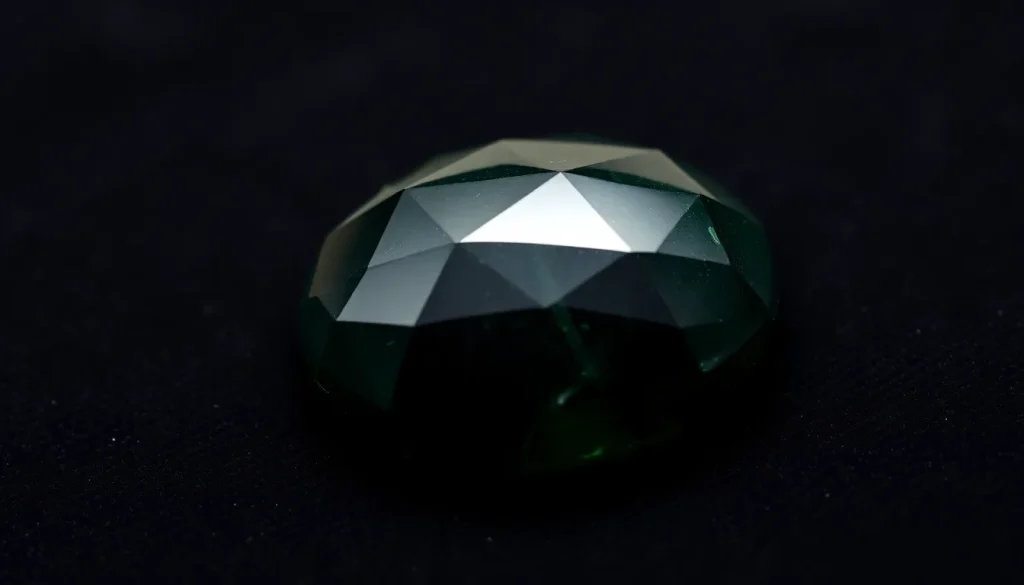
Aegirine is a sodium‑iron silicate mineral (NaFeSi₂O₆) belonging to the clinopyroxene subgroup. It crystallises in the monoclinic system and typically forms prismatic, slender, often needle‑like crystals. The stone is most noted for its deep green to black coloration, a vitreous to sub‑adamantine luster, and a hardness of 5.5‑6 on the Mohs scale.
History and Origin
The name “Aegirine” was coined in 1841 by mineralogist Wilhelm Haidinger after Aegir, the Norse god of the sea, reflecting the mineral’s often deep‑sea‑green hue. First described from specimens in Norway’s Langesund area, high‑quality crystals have since been reported from metamorphic and alkaline igneous complexes in Russia (Kola Peninsula), Canada (Ontario), the United States (California), Finland, and Sweden. Because it forms in high‑temperature, low‑pressure environments, aegirine is frequently associated with minerals such as augite, diopside, and rhodonite.
Meaning and Symbolism
In traditional gemstone lore, aegirine is regarded as a stone of strength, resilience, and clear purpose. Its dark, grounding color is thought to symbolize inner power and the ability to overcome obstacles. Collectors often associate it with attributes of perseverance, courage, and personal transformation.
Healing and Metaphysical Properties
Within crystal‑healing circles, aegirine is believed to aid emotional balance and promote self‑confidence. Practitioners claim it can help release old patterns, support the heart‑centered flow of love, and bolster the root chakra’s grounding energy. These are traditional beliefs and not medical advice; aegirine should not replace professional health care.
Varieties and Types
- Aegirine‑Augite: A solid‑solution series where aegirine and augite mix, producing crystals that range from deep green to brown‑black.
- Rhodonite‑Aegirine Assemblage: Often found together in metamorphic veins, creating striking contrast between pink rhodonite and dark aegirine.
- Needle‑Like Aegirine: Fine, elongated crystals prized by collectors for their crystal habit.
- Cabochon‑Cut Aegirine: Polished stones used in jewelry, usually cut from high‑clarity, deep‑green specimens.
Jewelry Uses and Care
Because aegirine has perfect cleavage on {110} and {100}, it is relatively brittle and must be set securely, often in protective bezel or channel settings. It is most commonly used for cabochons, beads, and pendants rather than faceted gems. Care instructions include:
- Clean with warm, soapy water and a soft brush; avoid ultrasonic cleaners.
- Dry with a lint‑free cloth; never expose to harsh chemicals or acids.
- Store separately from harder gemstones (e.g., quartz, topaz) to prevent scratching.
- Handle with care during setting due to its cleavage and moderate hardness.
Buying Guide
When purchasing aegirine consider the following factors:
- Color: Deep, uniform green to black without excessive brown or gray zoning is most valued.
- Clarity: Inclusions are common; look for stones free of large fractures that could compromise durability.
- Cut: Cabochons that showcase the stone’s natural luster are preferred. Avoid heavily faceted pieces unless the stone is exceptionally tough.
- Treatment: Natural aegirine is rarely treated; any claims of heat or dye should be scrutinized.
- Certification: Request a gemological report from a reputable lab (e.g., GIA, IGI) to verify authenticity and any treatments.
Because high‑quality specimens are limited, expect a moderate price range that reflects size, color intensity, and origin.
FAQ
What is aegirine good for?
Aegirine is valued for its deep green to black color in jewelry, especially cabochons and beads. Traditionally, it is believed to promote strength, grounding, and emotional balance, though these are not medical claims.
Is aegirine rare?
High‑quality, vivid green aegirine is relatively rare. While the mineral occurs in several countries, gem‑grade crystals with good clarity and color are limited, making fine specimens moderately scarce.
How can you tell if aegirine is real?
Real aegirine displays a vitreous luster, a refractive index around 1.72‑1.73, and a grey‑white streak. It often has perfect cleavage and may show a faint green fluorescence under UV. Professional gemological testing is recommended for certainty.
What chakra is aegirine associated with?
In crystal‑healing traditions, aegirine is commonly linked to the Heart chakra for emotional balance and sometimes to the Root chakra for grounding.
How should you clean aegirine?
Clean aegirine with warm, soapy water and a soft brush. Avoid ultrasonic cleaners, harsh chemicals, and extreme heat. Dry with a lint‑free cloth and store separately from harder gemstones.
Leave a Reply