
Short Answer
Overview
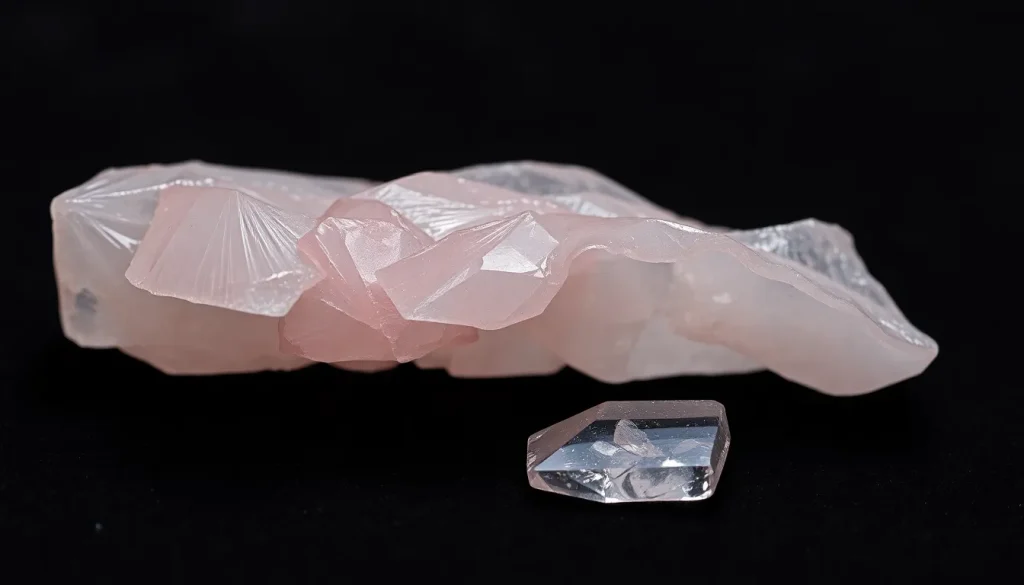
Charlesite is a rare member of the mica group, classified as a phyllosilicate mineral. It typically occurs as thin, flexible sheets that display a pearly to vitreous luster and a range of subtle hues from colourless to pale pink or yellow. Because of its delicate nature and attractive sheen, Charlesite is occasionally used in fine jewelry and as a collector’s gem.
History and Origin
The mineral was first described in 1915 from the Charles Mine in California, United States, and was named after the locality. Since then, additional occurrences have been reported in Nevada (USA), Brazil, and Namibia, where hydrothermal processes deposit the mineral in metamorphic host rocks. Its rarity and limited commercial mining have kept Charlesite largely a specimen stone rather than a mass‑market gem.
Meaning and Symbolism
In traditional gemstone lore, Charlesite is associated with clarity of thought and gentle emotional balance. Its soft pastel colors are said to symbolize calmness, modesty, and the subtlety of inner wisdom. Collectors often value the stone for its rarity and the quiet elegance it brings to jewelry designs.
Healing and Metaphysical Properties
Crystal‑healing practitioners attribute the following properties to Charlesite, based on belief rather than scientific evidence:
- Promotes mental clarity and aids in decision‑making.
- Supports emotional stability and reduces anxiety.
- Encourages a sense of inner peace and spiritual reflection.
These claims are part of traditional metaphysical systems and should not be interpreted as medical advice.
Varieties and Types
Charlesite does not have widely recognized commercial varieties, but natural specimens can differ in:
- Colour: colourless, very pale pink, or pale yellow.
- Transparency: from fully transparent to translucent.
- Crystal habit: typically thin, flexible sheets or micaceous flakes.
Jewelry Uses and Care
Because Charlesite is relatively soft (Mohs 4–5) and exhibits perfect basal cleavage, it is best suited for pendants, earrings, and brooch settings where the stone can be protected from impact. When set in protective metal bezels, its delicate sheets can be displayed without excessive risk.
Care recommendations:
- Avoid harsh mechanical abrasion; clean with a soft, lint‑free cloth.
- Use mild, neutral‑pH soap and lukewarm water for deeper cleaning; do not soak for extended periods.
- Store separately from harder gemstones such as quartz or diamond to prevent scratching.
- Keep away from extreme heat or sudden temperature changes, which can cause delamination.
Buying Guide
When purchasing Charlesite, consider the following factors:
- Source documentation: Reputable dealers should provide provenance, especially for specimens from known localities.
- Clarity and colour: Look for uniform, gentle colour without excessive inclusions that could weaken the sheets.
- Cut and setting: Well‑crafted settings that protect the stone’s basal planes are essential for durability.
- Treatment disclosure: Natural Charlesite is rarely treated; any enhancement (e.g., heating) should be disclosed.
Because the market is limited, prices can vary widely; obtain a written appraisal for high‑value pieces.
FAQ
What is Charlesite good for?
Charlesite is prized by collectors for its rarity and delicate pearly sheets, and it is occasionally set in pendants or earrings. Traditional crystal‑healing beliefs attribute mental clarity and emotional balance to the stone, but these are not medical facts.
Is Charlesite rare?
Yes, Charlesite is considered rare. High‑quality, transparent specimens are limited to a few localities such as California, Nevada, Brazil, and Namibia, and the stone is not widely mined for commercial jewelry.
How can you tell if Charlesite is real?
Authentic Charlesite exhibits perfect basal cleavage, a pearly luster, and a low Mohs hardness (4–5). A professional gemologist can confirm its identity with refractive index measurements and microscopic examination of its sheet structure.
What chakra is Charlesite associated with?
In crystal‑healing traditions, Charlesite is sometimes linked to the Crown Chakra, reflecting its subtle, spiritual qualities, though no single standard chakra association exists.
How should you clean Charlesite?
Clean Charlesite gently with a soft, lint‑free cloth. For deeper cleaning, use lukewarm water with a mild, neutral‑pH soap, then rinse and pat dry. Avoid ultrasonic cleaners, harsh chemicals, and extreme heat, as the stone is soft and has perfect basal cleavage.
Leave a Reply