
Short Answer
Overview
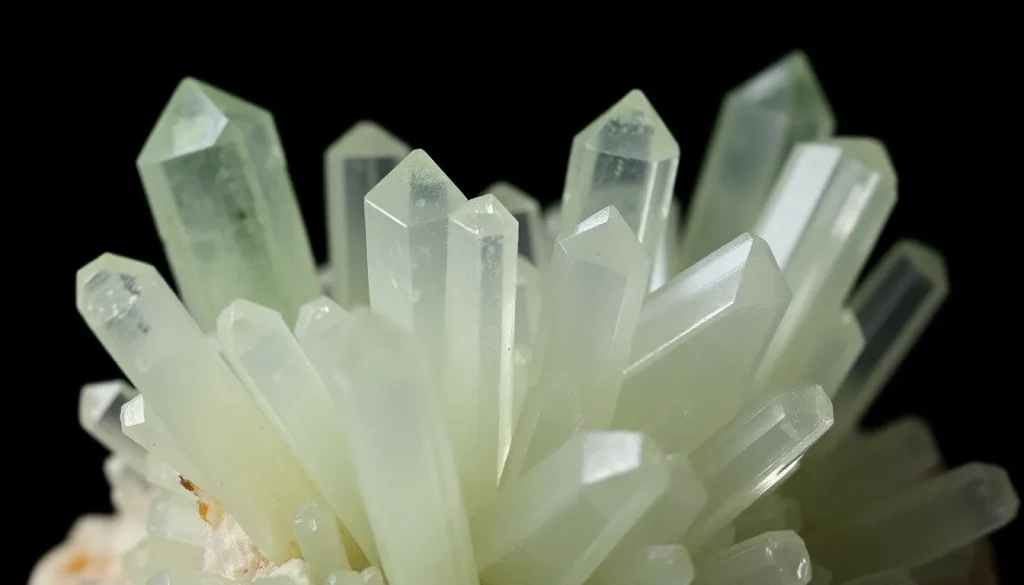
Vishnevite is a rare, hydrothermally formed silicate mineral that is occasionally cut as a gemstone. It typically occurs as small prismatic crystals with a pale green, white, or colorless appearance. The stone is known for its modest hardness and vitreous luster, making it suitable for delicate jewelry pieces when properly protected.
History and Origin
The mineral was first described in the early 20th century and named after Russian geologist V. Vishnev, who studied the mineral deposits of the Ural Mountains. Natural occurrences have been reported from a limited number of localities, most notably in Russia, Kazakhstan, and a few pegmatite occurrences in Canada. Because of its rarity, Vishnevite has remained largely a collector’s item rather than a mainstream gemstone.
Meaning and Symbolism
In traditional gemstone lore, Vishnevite’s soft green hue is associated with growth, renewal, and gentle healing. It is thought to encourage emotional balance and promote a sense of calm. The stone’s translucency is sometimes linked to clarity of thought and the ability to see situations from a fresh perspective.
Healing and Metaphysical Properties
Within crystal‑healing circles, Vishnevite is believed to support the heart chakra, fostering love, compassion, and emotional openness. Practitioners claim it can aid in releasing old emotional patterns and encourage new beginnings. These attributes are viewed as symbolic and should not replace professional medical treatment.
Varieties and Types
Vishnevite does not have widely recognized commercial varieties, but natural specimens can differ in color intensity and crystal habit:
- Pale Green Vishnevite – displays a light, mint‑green tint.
- Colourless Vishnevite – nearly transparent, often used for its subtle sparkle.
- White‑Veined Vishnevite – contains thin whitish inclusions that add visual interest.
All varieties share the same basic chemical composition, with variations arising from trace element substitutions.
Jewelry Uses and Care
Because Vishnevite ranks between 4 and 5 on the Mohs hardness scale, it is best suited for earrings, pendants, and brooches rather than rings that endure frequent impact. The stone should be set in protective mounts such as bezel or channel settings to shield its relatively soft surface.
Cleaning: Use a soft, lint‑free cloth and mild warm soapy water. Avoid ultrasonic cleaners and harsh chemicals, which can damage the crystal lattice or any surface treatments.
Storage: Keep Vishnevite pieces separate from harder gemstones (e.g., quartz, sapphire) to prevent scratching. Store in a padded jewelry box or a soft pouch.
Buying Guide
When purchasing Vishnevite, consider the following factors:
- Origin Documentation: Reputable dealers should provide provenance, especially for specimens from known localities.
- Color Consistency: Look for even coloration without unwanted dark inclusions.
- Cut and Setting: A well‑executed cut that maximizes the stone’s natural luster and protects its edges is essential.
- Treatment Disclosure: Some Vishnevite may be stabilized or impregnated to improve durability; ensure any treatments are disclosed.
- Certification: While formal gem‑ological certificates are rare for Vishnevite, a detailed gem‑lab report can add confidence.
Because Vishnevite is uncommon, prices can vary widely. Compare multiple sources and request high‑resolution images before finalizing a purchase.
FAQ
What is Vishnevite good for?
Vishnevite is prized by collectors for its rarity and gentle green hue. In crystal‑healing traditions it is said to support emotional balance and heart‑centered energy, but these beliefs are not medically proven.
Is Vishnevite rare?
Yes, high‑quality Vishnevite is uncommon. It occurs only in a few well‑documented localities and is typically found in small crystal sizes, making gem‑quality material limited.
How can you tell if Vishnevite is real?
Examine the stone for its characteristic pale green to colourless translucency, vitreous luster, and perfect cleavage. A professional gem‑lab test (e.g., Raman spectroscopy) provides definitive identification.
What chakra is Vishnevite associated with?
Traditional crystal‑healing sources associate Vishnevite with the Heart (Anahata) chakra, believed to promote love and emotional openness.
How should you clean Vishnevite?
Clean Vishnevite with a soft cloth and warm soapy water. Avoid ultrasonic cleaners, harsh chemicals, and high‑impact settings due to its modest hardness (4–5 on Mohs).
Leave a Reply