
Short Answer
Overview
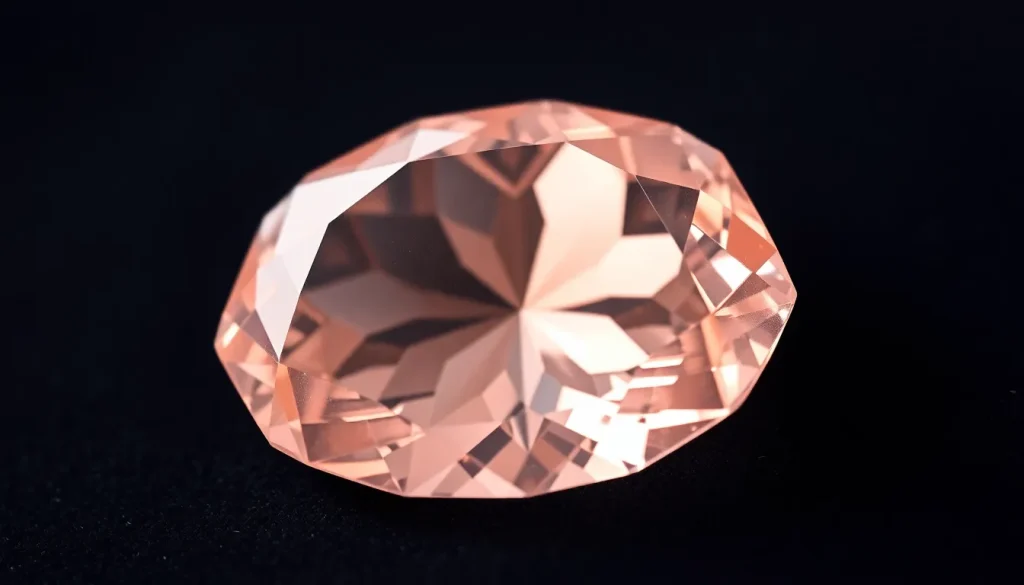
Morganite is a member of the beryl family (Be3Al2(Si6O18)) that displays a range of pink to peach colors. Its subtle hue, combined with a hardness of 7.5–8 on the Mohs scale, makes it suitable for a variety of jewelry applications. The stone is typically found in transparent, vitreous crystals and is often cut as a faceted gem or in cabochon form.
History and Origin
The name “Morganite” honors the American financier J.P. Morgan, who was an early patron of the gemstone trade. The first significant deposits were discovered in Madagascar in the early 20th century, and commercial mining later expanded to Brazil, Mozambique, Afghanistan, and the United States (North Carolina). Historically, the stone was used as a less‑expensive alternative to pink diamonds, gaining popularity in the 1970s as a romantic engagement stone.
Meaning and Symbolism
In traditional gemstone lore, Morganite is associated with unconditional love, compassion, and emotional healing. It is said to encourage the expression of personal truth and to foster a sense of calm confidence. The stone’s gentle pink tone is often linked to the heart chakra, symbolizing openness and affection.
Healing and Metaphysical Properties
Crystal‑healing practitioners attribute the following properties to Morganite:
- Emotional balance: Promotes self‑acceptance and reduces stress.
- Heart‑centered energy: Enhances love, empathy, and forgiveness.
- Physical well‑being: Traditional belief holds that it may support the circulatory system and alleviate menstrual discomfort, though these claims are not medically verified.
These uses are based on folklore and should not replace professional medical advice.
Varieties and Types
While all Morganite belongs to the beryl family, variations occur in color intensity and clarity. The most common types are:
- Classic Pink Morganite: Soft pastel pink to peach.
- Deep Peach Morganite: Richer, more saturated peach tones, often found in higher‑quality specimens.
- Treated Morganite: Heat treatment can enhance pink hues; most market‑available stones are heat‑treated to achieve uniform color.
Jewelry Uses and Care
Due to its durability, Morganite is suitable for rings, earrings, pendants, and bracelets. It is frequently cut en cœur, oval, cushion, and pear shapes. Care guidelines include:
- Clean with warm, soapy water and a soft brush.
- Avoid harsh chemicals, ultrasonic cleaners, and steam cleaning if the stone is heat‑treated.
- Store separately from softer gems to prevent scratching.
Buying Guide
When purchasing Morganite, consider the following factors:
- Color: Preference ranges from very light pink to deep peach; richer colors are rarer and command higher prices.
- Clarity: Inclusions are common but should not detract from overall brilliance.
- Cut: Well‑cut stones display strong fire and brilliance; cabochons are popular for a softer look.
- Treatment Disclosure: Reputable dealers will disclose any heat treatment.
- Certification: For high‑value pieces, request a GIA or equivalent gemological report.
Buying from a trusted jeweler or certified dealer ensures authenticity and proper documentation.
FAQ
What is Morganite good for?
Morganite is prized for its delicate pink color in fine jewelry and is traditionally believed to promote love and emotional balance, though these metaphysical claims are not scientifically proven.
Is Morganite rare?
High‑quality, deep‑peach Morganite is relatively rare, while lighter pink stones are more common. Rarity depends on color saturation, clarity, and whether the stone is untreated.
How can you tell if Morganite is real?
Real Morganite exhibits a hardness of 7.5–8, a vitreous luster, and a refractive index around 1.58. Professional testing with a spectroscope or gemological lab report confirms authenticity.
What chakra is Morganite associated with?
Traditional crystal‑healing beliefs associate Morganite with the Heart (Anahata) chakra, symbolizing love and compassion.
How should you clean Morganite?
Clean Morganite with warm, mild soap and a soft brush. Avoid ultrasonic cleaners and harsh chemicals, especially if the stone has been heat‑treated.
Leave a Reply