
Short Answer
Overview
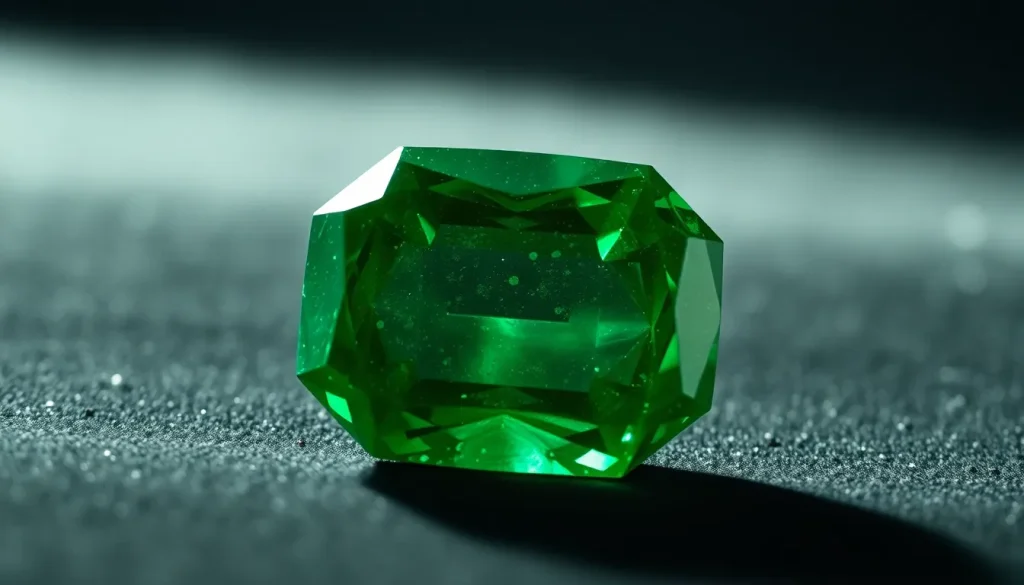
Emerald is a green gemstone belonging to the beryl family, distinguished by its deep, vivid hue caused primarily by trace amounts of chromium or, less commonly, vanadium. It is one of the traditional twelve birthstones and is celebrated for both its beauty and its cultural symbolism.
History and Origin
The earliest recorded emeralds come from ancient Egypt, where they were mined in the Eastern Desert and treasured by pharaohs. Throughout antiquity, emeralds were also sourced from the Indian subcontinent and later from the famed Colombian deposits discovered in the 16th century, which remain among the most coveted sources today. Modern mining now occurs in several continents, including Africa, South America, and Asia.
Meaning and Symbolology
In many cultures, emeralds symbolize rebirth, fertility, and love. They have traditionally been associated with the heart, representing compassion, loyalty, and emotional balance. The gemstone is also linked to prosperity and the granting of foresight.
Healing and Metaphysical Properties
Within crystal‑healing traditions, emerald is believed to promote emotional healing, enhance intuition, and support the heart chakra. Practitioners claim it can aid in reducing stress, fostering harmonious relationships, and encouraging personal growth. These attributes are based on traditional beliefs and are not medical facts.
Varieties and Types
- Colombian Emeralds – Typically exhibit the most saturated green and are prized for clarity.
- Zimbabwean Emeralds – Known for a slightly darker, forest‑green tone.
- Brazilian Emeralds – Often display a lighter, yellow‑green hue.
- Trapiche Emeralds – Feature a distinctive six‑spoked star‑like pattern caused by crystal growth.
- Synthetic Emerald – Created by hydrothermal or flux methods; identical in composition but usually free of natural inclusions.
Jewelry Uses and Care
Emeralds are most frequently set in rings, pendants, earrings, and high‑end watches. Because the stone rates 7.5–8 on the Mohs scale and possesses natural inclusions (often called the “jardin”), it is prone to chipping if struck. Care recommendations include:
- Clean with warm, soapy water and a soft brush; avoid ultrasonic cleaners for untreated stones.
- Store separately from harder gems such as diamonds or sapphires to prevent scratches.
- Limit exposure to harsh chemicals, extreme heat, and prolonged sunlight, especially for treated stones.
- Consider periodic professional inspections to assess setting security and any treatment stability.
Buying Guide
When selecting an emerald, evaluate the following criteria:
- Color – The most valuable emeralds display a saturated, evenly distributed green without brown or gray overtones.
- Clarity – Inclusions are expected; however, stones with fewer and less visible inclusions command higher prices.
- Cut – Emerald‑cut (step cut) is traditional, but other cuts are acceptable if they enhance color and minimize visible inclusions.
- Treatment – Most emeralds are oil‑treated to improve clarity. Reputable dealers will disclose any treatment.
- Origin – Provenance from renowned localities such as Colombia can add value, though quality outweighs geography.
Always request a certification from a recognized gemological laboratory (e.g., GIA, IGI) when purchasing high‑value emeralds.
FAQ
What is emerald good for?
Emerald is prized for high‑end jewelry due to its intense green color, and traditionally it is believed to support emotional balance, heart‑centered love, and intuitive insight.
Is emerald rare?
High‑quality, vivid‑green emeralds with good clarity are relatively rare, especially untreated stones. Rarity depends on color saturation, clarity, and origin, with Colombian stones often commanding premium prices.
How can you tell if emerald is real?
Authentic emeralds display a characteristic green hue, natural inclusions, and a specific weight. Professional testing—such as refractive index measurement, spectroscopy, and certification from a gem lab—provides definitive verification.
What chakra is emerald associated with?
In crystal‑healing traditions emerald is linked to the Heart (Anahata) chakra, believed to promote love, compassion, and emotional healing.
How should you clean emerald?
Clean emeralds gently with warm, soapy water and a soft brush. Avoid ultrasonic cleaners and harsh chemicals, especially for oil‑treated stones, and store them separately from harder gemstones.
Leave a Reply